How Node-Based AI Workflows Are Changing Product Content for Beverage and Supplement Brands
Figma paid roughly $200 million for a two-year-old workflow tool called Weavy: about 50 times its original $4 million seed round. That number, on its own, tells you where product content production is heading. When a company the size of Figma bets that hard on node-based AI workflows, it's a signal that this isn't a novelty; it's becoming infrastructure.
For beverage and supplement brands, especially startups, this shift matters more than it might for other categories. These brands live or die on shelf presence and scroll-stopping product shots, but they rarely have the reshoot budget of an established CPG player. A workflow that turns one reference photo into a season's worth of content changes the math.
This piece looks at where these workflows came from, why reference images (not just prompts) are the part that actually matters for product-heavy categories, and what it means for a startup brand trying to compete visually on a fraction of the budget.
From open-source nodes to production platforms
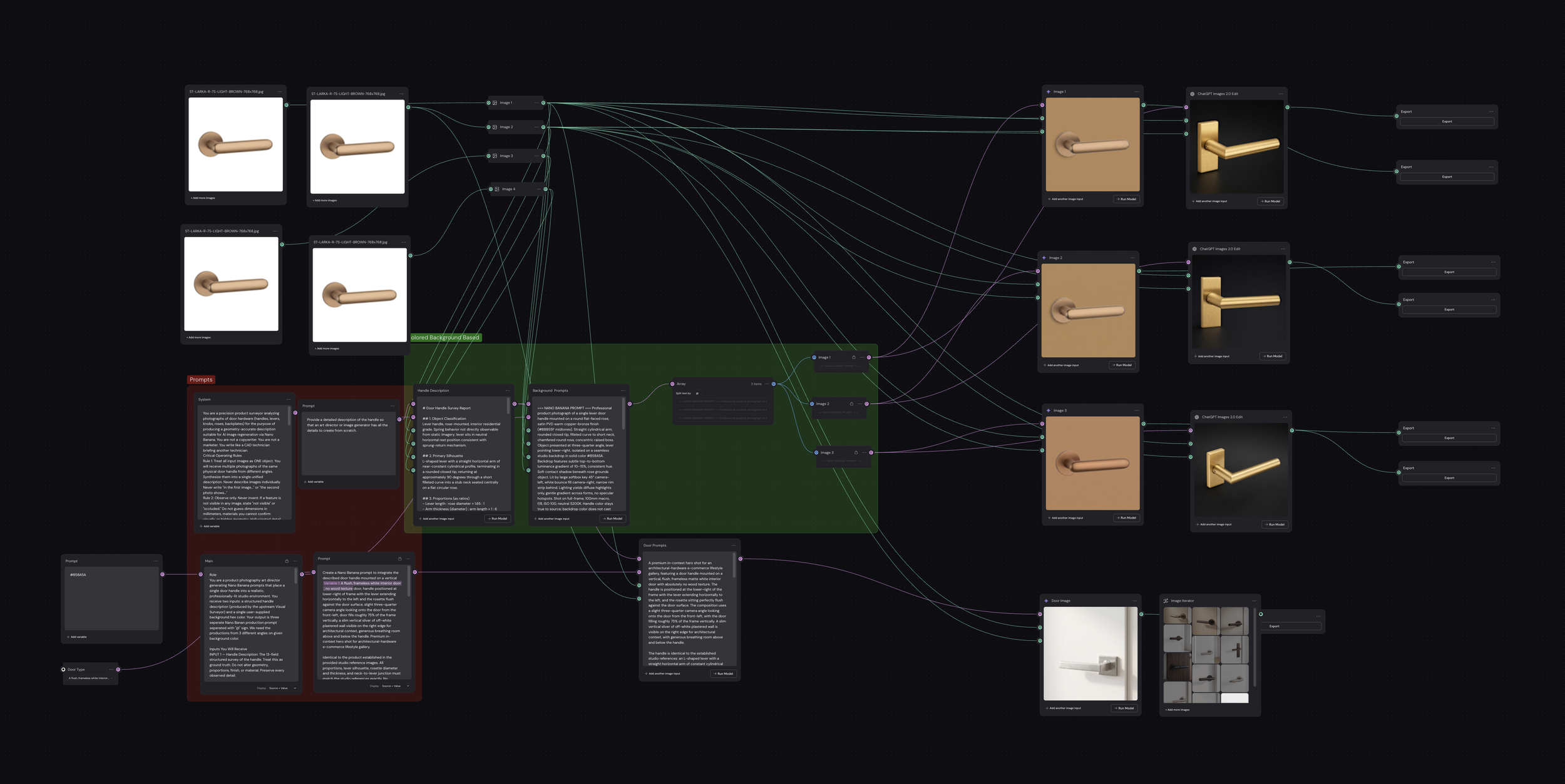
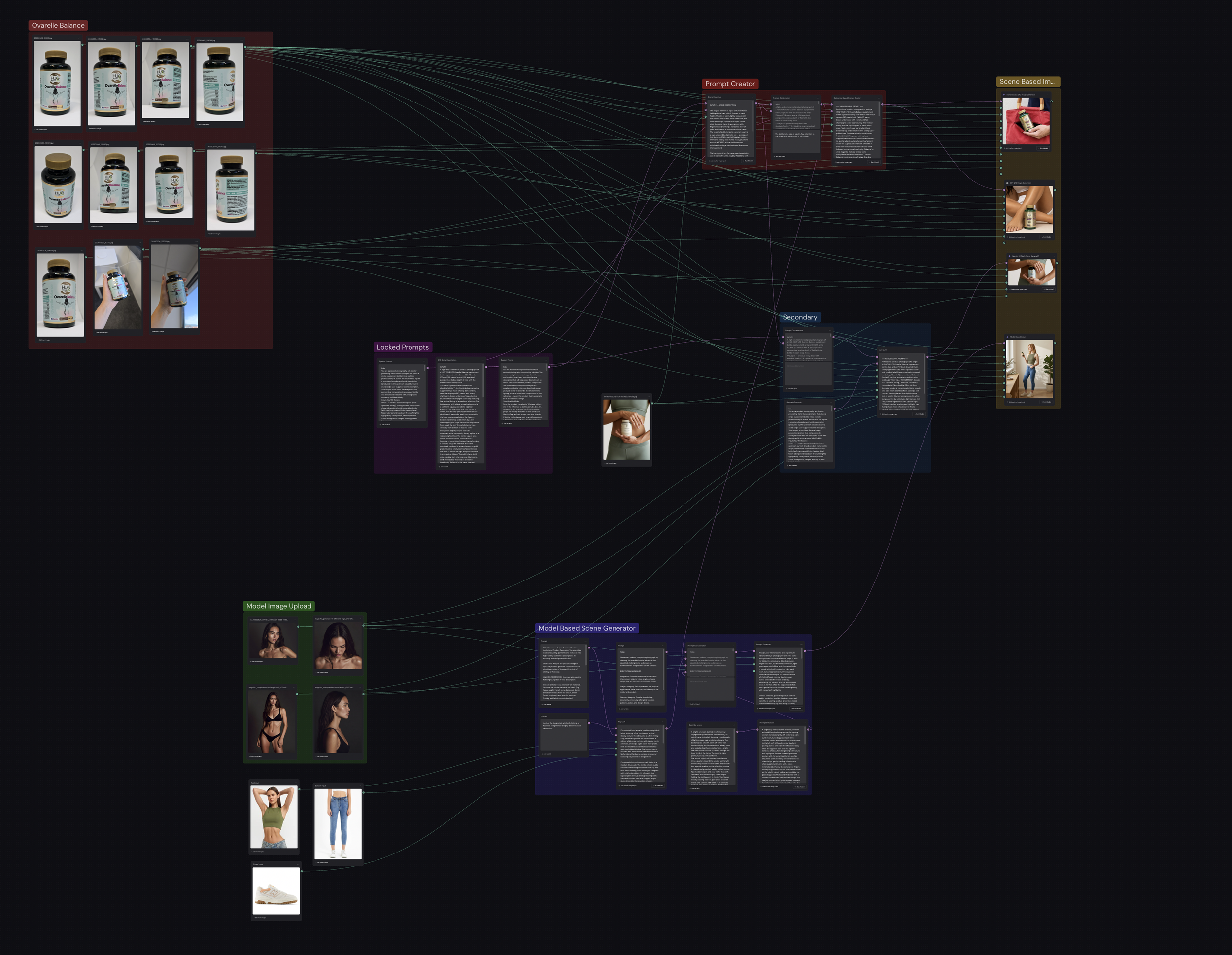
ComfyUI set the template. Instead of typing a prompt and hoping for the best, it lets you build an image pipeline as a graph: each step (generation, upscaling, background removal, relighting) is its own node, wired to the next. You can inspect, swap, or rebuild any part of it. That's a meaningfully different way of working than single-shot prompting, and it's why ComfyUI became the standard for anyone doing serious commercial AI image work rather than casual generation.
Figma Weave (built from the Weavy acquisition) and Magnific Spaces are the productized, team-friendly version of the same idea. Both are infinite canvases where nodes represent generators, editors, and upscalers, and you connect them to define how an image moves through a pipeline: write a prompt, generate a base image, upscale it to print resolution, all as one reusable graph instead of a one-off task. Figma Weave connects models like Seedance, FLUX.2, Nano Banana, and Seedream on a single canvas; Magnific Spaces offers dedicated Image Generator, Upscaler, and Editor nodes you chain together. Neither requires the technical setup ComfyUI does, which is exactly why they've moved this workflow logic from developer tooling into something a small brand team can run themselves.
Why reference images matter more than prompts
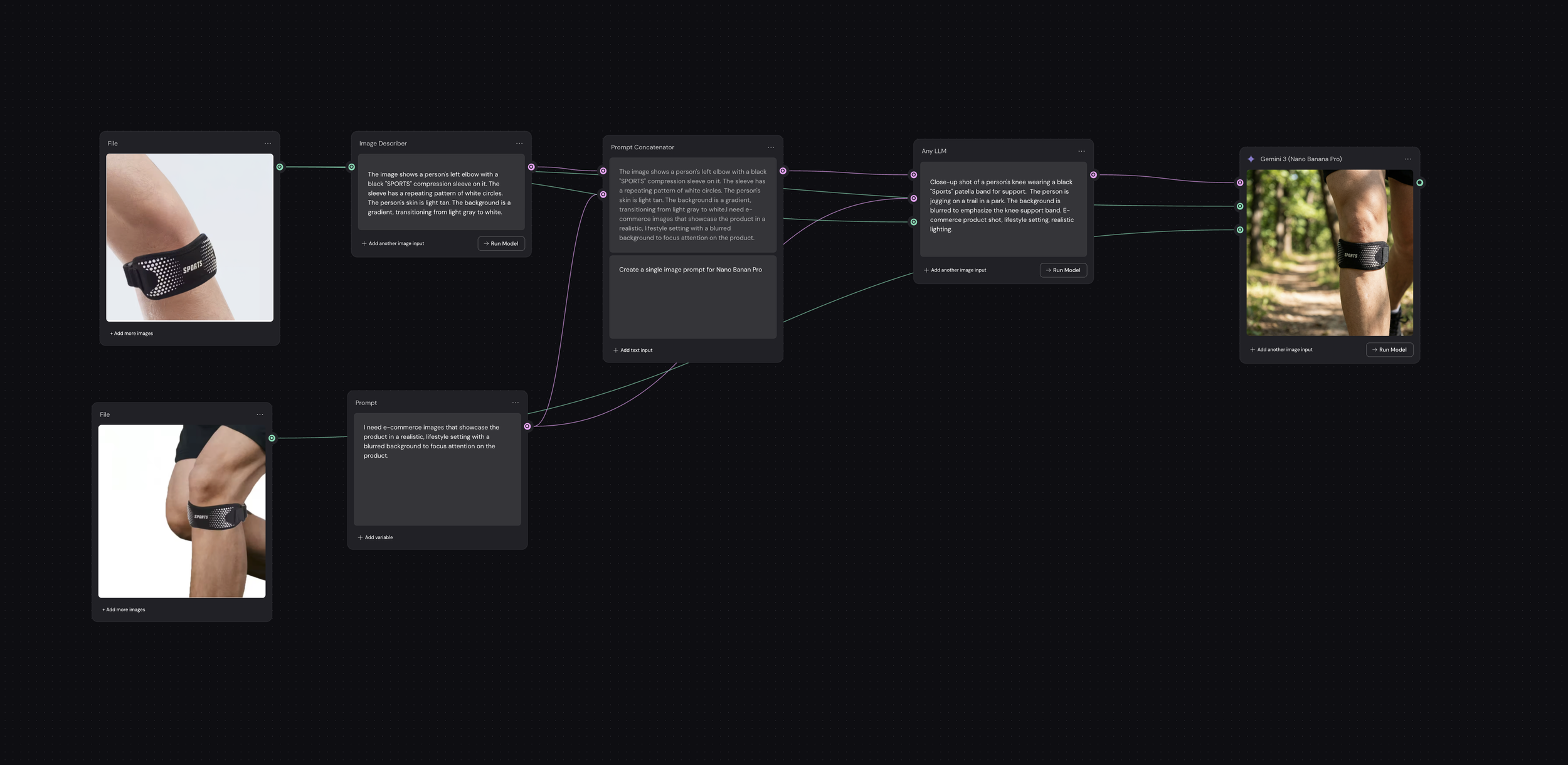
Here's the part that gets glossed over in most coverage of these tools: for beverage and supplement work, the product itself has to survive the process untouched. A prompt-only workflow will happily reinterpret your label, warp your cap color, or invent typography that doesn't exist on the bottle. That's a non-starter when the bottle is the brand.
This is why image-to-image, reference-driven nodes matter more than clever prompting for this category. You feed the pipeline an actual product photo, and the workflow builds scenes, backgrounds, and lighting around that fixed reference rather than regenerating the product from scratch each time. It's the same discipline we apply in manual compositing: the label and the highlight on the glass need to read as one continuous object, not two things pasted together. The AI workflow gets you the raw material faster; the same eye for consistency still has to check it.
What this changes for startup brands specifically
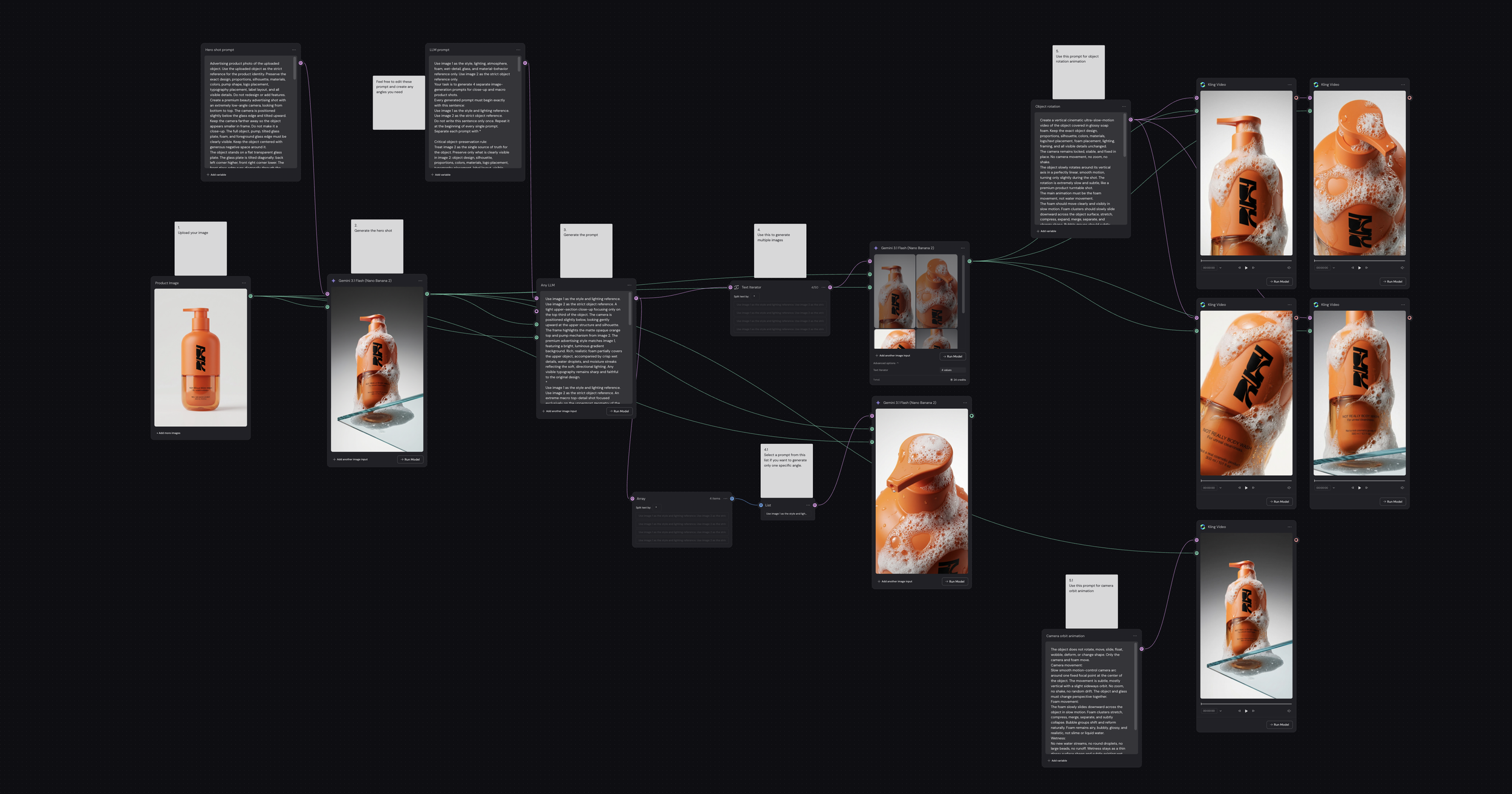
The practical shift is scale without a proportional budget increase. One properly lit hero shot of a supplement bottle or a canned drink can now feed dozens of scene variations: different backgrounds, seasonal contexts, lifestyle settings, and the various crop ratios social platforms demand. Production numbers from ComfyUI-based e-commerce workflows show processing time dropping from roughly 12 minutes to under a minute per image, with per-image cost in the $0.10-0.50 range once the full pipeline is accounted for. Those aren't small differences; they're the difference between "we can only afford one campaign shoot a quarter" and "we can afford to test five directions."
The food and beverage AI market is projected to hit $15.36 billion in 2025, and the pattern showing up across that spending is "AI-generated, human-curated": AI speeds up ideation and production, but art direction, brand consistency, and final sign-off stay human. That's not a hedge; it's the actual working model brands are converging on. It also matters that 83% of consumers say they want to know when AI is used in content they see, which is a good reason for brands to treat these workflows as a production tool rather than something to hide.
We've built and delivered workflow-based systems like this for both startup and established brands across a range of use cases: product photography variations, packaging mockups, and campaign asset generation among them. The pattern holds regardless of company size: the workflow does the heavy lifting on volume, and a trained eye does the final pass.
Where the craft still matters
Speed doesn't remove the need for quality control, and this is where a lot of DIY AI content falls apart before it reaches a shelf or a feed. Label text can come out slightly warped. Reflections on glass or metal can look plausible but physically wrong. Color can drift just enough that the bottle no longer matches the brand's Pantone. None of these are visible in a quick preview; they show up when someone actually zooms in.
This is the layer where post-production work earns its place: catching the artifacts a workflow produces at scale, correcting label alignment, and making sure the final image would pass the same scrutiny a fully shot-and-composited image would. The workflow gets you from one photo to a hundred variations fast. Getting those hundred to actually look shelf-ready is still a craft problem, not a software problem.
The takeaway
Node-based AI workflows, whether it's ComfyUI's open-source roots or the productized versions in Figma Weave and Magnific Spaces, are a genuine content multiplier for beverage and supplement brands that need more visual output than their budget technically allows. But they multiply what you already have; they don't replace the judgment that decides what's good enough to publish. If you're building a content pipeline for a product line and want it to hold up past the first zoom-in, we're always happy to talk.