
Innovative visual storytelling examples that drive impact
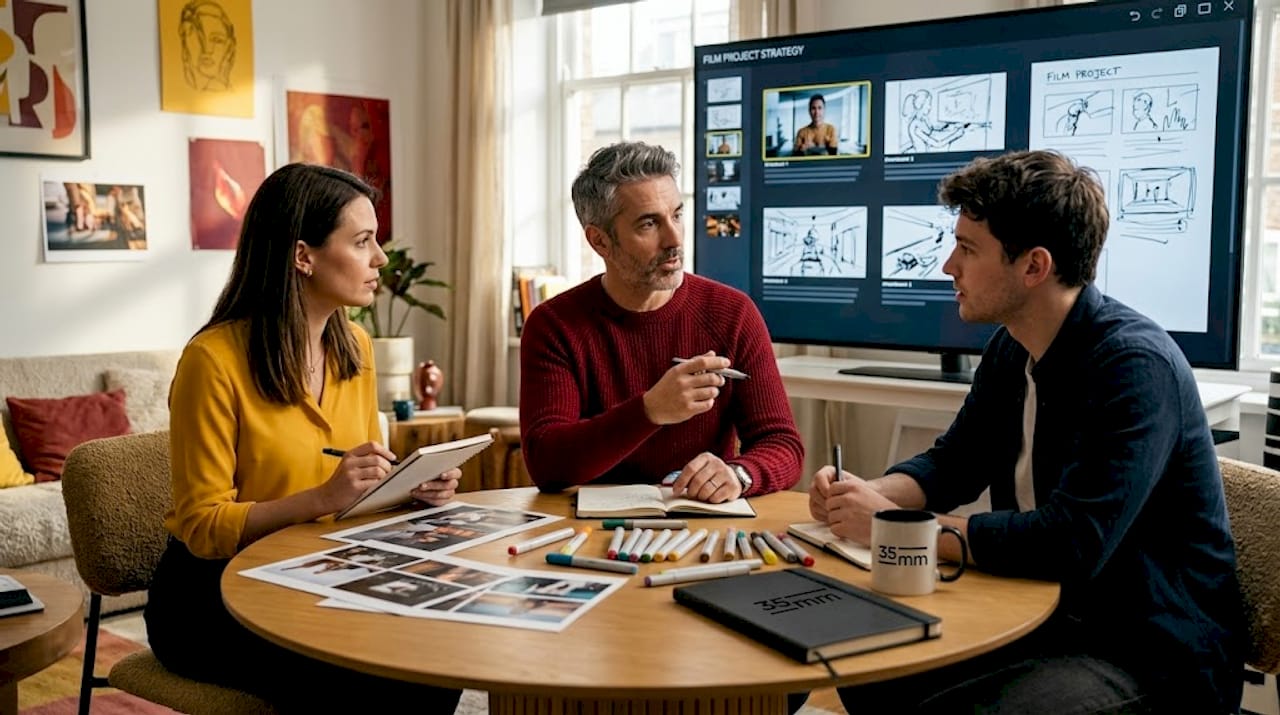
Tech and automotive marketers know the pressure well: every campaign competes against an ever-growing flood of polished visuals, and simply having a high-quality image is no longer enough to hold an audience’s attention. The real differentiator is narrative, the invisible architecture that transforms a product visual into a story a viewer actually remembers. In this article, we look at what genuinely effective visual storytelling looks like in your sector, walk through flagship campaign examples from Hyundai, MINI, and Cisco, and draw out the principles you can apply to your own work right now.
Table of Contents
- What makes great visual storytelling in tech and automotive marketing?
- Hyundai’s webtoon and ‘Brilliant Moments’: Serial storytelling, emotion, and modularity
- MINI & Paul Smith: Immersive design storytelling through the ‘memory palace’
- Cisco ‘World in Motion’: Gamified digital storytelling for technology audiences
- Comparing and measuring success: Visual storytelling metrics and benchmarks
- What most marketers miss about visual storytelling: It’s a repeatable system, not a one-off campaign
- Take your visual storytelling further with proven professional support
- Frequently asked questions
Key Takeaways
| Point | Details |
|---|---|
| Modular narratives | The best visual storytelling assets are modular and adaptable across multiple formats for greater reach. |
| Human-first campaigns | Emotional and human-centric stories outperform product-only messaging in tech and automotive marketing. |
| Design and immersion | Campaigns that immerse audiences in design and narrative, such as memory palaces or webtoons, leave lasting impressions. |
| Objective measurement | New benchmarking tools provide objective ways to assess story coherence and engagement impact. |
| Repeatable systems | Building a repeatable visual storytelling framework delivers more consistent brand results campaign after campaign. |
What makes great visual storytelling in tech and automotive marketing?
With the challenge understood, let’s clarify what successful visual storytelling actually looks like in this context. The term gets used loosely, so it’s worth setting clear criteria before evaluating any campaign.
At its core, visual storytelling in tech and automotive marketing is the use of images, motion, design, and sequence to communicate a brand’s values and emotional promise, not just its features. A product render can show a car’s lines. A story shows why those lines matter to a specific person in a specific moment. The distance between those two things is where campaigns win or lose.
The strongest campaigns we observe share a few structural qualities. They are built around a consistent visual world, a recurring palette, character type, or setting that makes each new asset feel like part of a larger whole rather than a standalone execution. They lead with human experience rather than specification. And they are designed with modularity in mind, meaning the same narrative idea can flex across a social cutdown, a homepage hero, a print spread, and an OOH placement without losing coherence.
This last point is more strategic than it might seem. Narrative systems are modular across channels: a single story world or guiding conceit lets you adapt assets for different formats while preserving a unified brand feeling. That is far more efficient, and far more memorable, than producing a new concept for every touchpoint. You can explore how this plays out practically in visual content creation strategies across campaign types.
Measuring whether storytelling is working has historically relied on subjective judgment, but that is changing. Objective frame/shot-level analysis of visual narrative effects is now an established research direction, giving marketers and post-production teams quantitative tools to assess what is actually resonating and why.
“A campaign is not just what the audience sees. It is what they remember, and what they feel compelled to share.”
Pro Tip: Before briefing any visual campaign, define your story world first: the emotional territory, the recurring visual motifs, and the character types. Every asset should feel like it belongs to the same universe, whether it runs on Instagram or a billboard.
Hyundai’s webtoon and ‘Brilliant Moments’: Serial storytelling, emotion, and modularity
Let’s look at how these principles come to life in flagship automotive brand campaigns. Hyundai offers two strong, complementary examples worth studying in detail.
The first is Hyundai’s use of the webtoon format for brand storytelling, building serialized narratives with recurring characters built around an EV concept. The webtoon format, originally popularized in South Korean digital publishing, is a vertically scrolling comic ideally suited for mobile consumption. Hyundai adopted this format not to sell features but to build emotional familiarity with an electric vehicle lifestyle. The recurring characters carry reader investment across episodes, so each installment deepens the story rather than starting from zero. The vehicle appears, but as part of the characters’ world rather than the focal point of a spec sheet. For marketing teams, this is a masterclass in brand integration: the product feels essential to the narrative without dominating it.
The second example is the “Brilliant Moments” campaign, which shifted from product-only to emotion-led narrative, with vehicles as supporting actors in stories about human connection, memory, and aspiration. The campaign’s long-form films do not open with engine specifications or efficiency ratings. They open with a scene you recognize from your own life, and the vehicle earns its place by enabling that moment. This is the emotional storytelling model at its most refined. The practical lesson is that when you lead with human truth, product relevance follows naturally.
Taken together, these two campaigns demonstrate modularity in a genuine sense. The webtoon runs as a serial digital asset adapted perfectly for mobile. The “Brilliant Moments” films translate to broadcast, social, and digital display with consistent emotional tone even when the execution changes format. For automotive marketers, this dual approach shows how a single brand story world can sustain multiple content formats without requiring a new creative concept each time. Read more about building visual branding for ROI and how key visual strategies can anchor campaign consistency across touchpoints.
Pro Tip: Tie recurring visual characters or story arcs directly to product launch calendars. A new episode or chapter released alongside a product update creates a natural, non-intrusive reason for the audience to reengage.
“The vehicle should earn its place in the story, not demand it.”
MINI & Paul Smith: Immersive design storytelling through the ‘memory palace’
Automotive examples show modular storytelling in action; let’s see how similar principles work when a brand leans into design as the primary narrative vehicle. The MINI and Paul Smith collaboration offers a genuinely different approach that tech marketers can learn from as much as automotive teams.
The MINI Paul Smith campaign centers on a short film built as a “memory palace,” with each scene mapping to a specific design principle and a deliberate focus on tactile, in-camera effects rather than digital-only animation. This choice matters. At a time when audiences are saturated with CGI and digital compositing, the decision to foreground physical, handcrafted visual texture creates immediate differentiation. Each scene in the film functions as a room in a designer’s mind, inviting the viewer into a creative process rather than presenting a finished product for admiration.
The structural insight here is that the campaign does not just feature a collaboration; it makes the collaboration’s process the story. Viewers are not watching a car being unveiled. They are watching design thinking made visible, which is a fundamentally more engaging proposition. This approach works because it treats the audience as curious, intelligent people who are interested in craft and intention, not just outcome.
For technology marketers specifically, this principle is highly transferable. If your brand is built on engineering, design, or innovation, the story of how something was made is often more compelling than the thing itself. A short film showing the design decisions behind a new device, told through immersive visual set-building rather than a product walkthrough, can hold attention in ways that a straightforward product video rarely will. Explore how this thinking applies to creating product visuals that communicate brand value rather than just product features.
“Invite your audience into a process, not just an outcome. Curiosity holds attention longer than revelation.”
The MINI Paul Smith campaign also demonstrates the value of cross-category collaboration as a storytelling mechanism. When two design-forward brands share a story, each audience becomes a potential gateway to the other, extending reach organically without paid amplification.
Cisco ‘World in Motion’: Gamified digital storytelling for technology audiences
Seeing the diversity of campaign formats, let’s compare how these approaches stack up by benchmarks and metrics. First, Cisco’s “World in Motion” campaign gives us a clear benchmark for what modular storytelling looks like in a B2B technology context.
Cisco’s campaign was built from numerous digital assets including a video series and animated banner ads, unified by a narrative outer space theme park. That thematic choice is deliberate. An outer space theme park is playful, visually distinctive, and carries immediate associations with exploration, scale, and possibility, which are precisely the brand values Cisco wanted to communicate in the context of network infrastructure. By anchoring every asset to the same visual world, Cisco created a campaign that accumulated recognition across touchpoints rather than fragmenting attention across disconnected executions.
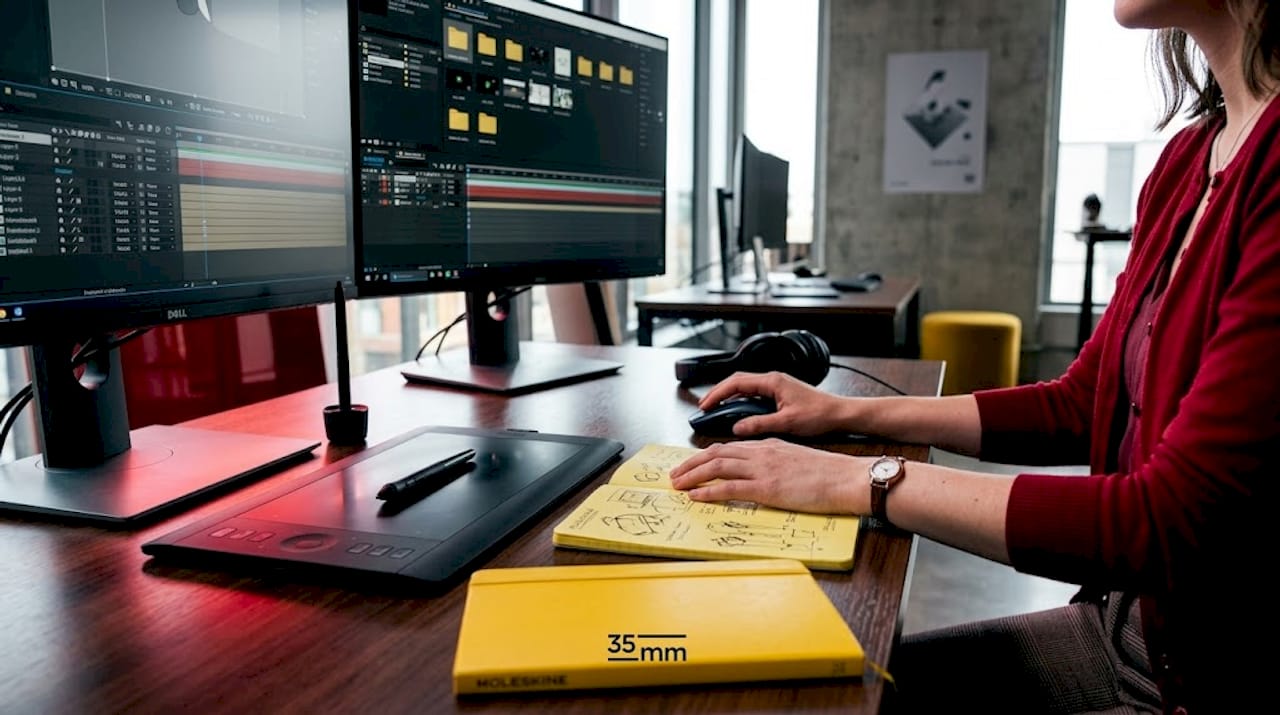
The animated approach also solved a specific B2B problem: how do you make technical infrastructure genuinely engaging? Playful, well-executed animation can carry complex information with a light touch, lowering the cognitive load for the viewer while sustaining their interest. The gamified narrative layer, where the theme park conceit invites discovery and exploration, adds an interactive quality even in passive formats like banner advertising.
Pro Tip: For B2B technology campaigns, gamification and interactive storytelling consistently outperform static product-focused creative in engagement metrics. Even a simple narrative arc (problem, journey, resolution) built into an animated series can double time-on-site compared to standard display advertising.
| Campaign element | Cisco World in Motion approach | Benefit for tech marketers |
|---|---|---|
| Unifying theme | Outer space theme park | Memorable, distinctive visual world |
| Asset types | Video series + animated banners | Consistent story across formats |
| Tone | Playful, exploratory | Reduces B2B content fatigue |
| Narrative device | Gamified journey | Drives discovery and deeper engagement |
Stay current with visual content trends in 2026 and how creative production for storytelling is evolving in both B2B and B2C contexts.
Comparing and measuring success: Visual storytelling metrics and benchmarks
With comparison and measurement in hand, what can we recommend to tech and automotive marketers making choices for their next campaign? The three campaigns above demonstrate three distinct strategic emphases, emotion-led (Hyundai), design-immersive (MINI), and playfully gamified (Cisco), but they all share a commitment to narrative coherence and modularity. That commonality is the most consistent predictor of campaign success we see across sectors.
Measuring visual storytelling effectiveness has traditionally depended on engagement metrics: view duration, share rate, brand recall, and sentiment. These remain important. But the field is advancing. Story visualization evaluation tools such as ViStoryBench and VinaBench now provide objective metrics for assessing visual narrative consistency and prompt alignment. ViStoryBench’s dataset approach tests story visualization across thousands of frames, providing a quantitative lens on whether your visual narrative is actually coherent or just feels that way. The largest current benchmark datasets use over 10,000 visuals, giving researchers and brand teams the scale needed to draw meaningful conclusions rather than relying on gut instinct alone.
| Campaign | Primary storytelling mode | Key metric to watch | Modular format? |
|---|---|---|---|
| Hyundai webtoon | Serial character narrative | Return readership, episode completion | Yes (mobile-first serial) |
| Hyundai Brilliant Moments | Emotion-led long-form film | Brand sentiment, recall, shareability | Yes (film to social cutdowns) |
| MINI Paul Smith | Design-immersive short film | Audience quality, PR amplification | Partial (film-led) |
| Cisco World in Motion | Gamified animated universe | Engagement rate, time-on-site | Yes (video + banners) |
For teams assessing their own campaigns, we recommend combining traditional engagement KPIs with frame-level consistency checks, particularly for campaigns where visual tone and character continuity are central to the brief. Ask: does each asset in this campaign feel like it belongs to the same story world? If a viewer encountered any single asset without branding, would they recognize the campaign? Those two questions surface narrative coherence more reliably than reach data alone. Discover how visuals drive engagement and what the data says about storytelling-led creative versus product-centric approaches.
What most marketers miss about visual storytelling: It’s a repeatable system, not a one-off campaign
Here is the perspective shift we consistently find ourselves returning to after two decades of working with tech and automotive brands: the campaigns that actually compound over time are the ones built as systems, not events.
Most marketing teams still approach visual campaigns as discrete productions. A launch campaign, a seasonal push, a product reveal. Each one is designed to stand alone, and when it is over, the assets are archived and the next brief begins from a blank page. This is an expensive and strategically inefficient way to build a brand. The evidence from the campaigns we looked at points in exactly the opposite direction.
Hyundai’s webtoon is not a one-time execution. It is a narrative infrastructure that can grow with every product cycle. Cisco’s theme park universe can host new features, new characters, and new stories without rebuilding from scratch. MINI’s collaboration model creates a template that can be applied to future creative partnerships. The common thread is that the best visual storytelling investments depreciate slowly and compound interest over time, because each new asset builds on the recognition already established.
The uncomfortable truth is that building a repeatable visual system requires more strategic investment upfront: developing the story world, defining the visual grammar, establishing character or thematic continuity. Many brands skip this because it feels abstract before any assets exist. But skipping it means starting over with each campaign, which ultimately costs more and achieves less. We encourage the teams we work with to ask a simple question before any visual brief is finalized: is this campaign building something that will still be useful in two years? If the answer is no, it may be worth rethinking the creative foundation. A good guide to boosting engagement will always bring you back to the same principle: narrative systems outlast individual executions.
Take your visual storytelling further with proven professional support
The campaigns covered in this article share one practical reality: behind each one is a production team with the skills to translate a strategic narrative into visual assets that actually perform at scale. Conceptual clarity is essential, but execution is where campaigns succeed or fall short.
At 35milimetre, we work with marketing teams, ad agencies, and brand managers in the technology and automotive sectors to turn campaign concepts into high-end visual deliverables, from CGI compositing and 3D renders to AI-enhanced imagery and post-production work that holds up across every format your campaign demands. If you are building a modular visual narrative and need a production partner who understands both the creative and the technical side, our professional visual storytelling services are a strong next step. Let’s build something worth remembering.
Frequently asked questions
What is one proven way to evaluate the impact of visual storytelling?
ViStoryBench and VinaBench provide objective metrics for assessing visual narrative consistency and prompt alignment, offering a quantitative alternative to purely subjective campaign evaluation.
How can modular storytelling make campaigns more effective?
Modular storytelling lets brands reuse and adapt a core narrative across formats, so each new asset builds cumulative recognition rather than starting from scratch. Narrative systems across channels consistently outperform disconnected campaign executions in long-term brand recall.
Why do tech and automotive brands move away from product-only messaging?
Focusing on human stories builds emotional resonance that product specifications cannot achieve on their own. Hyundai’s “Brilliant Moments” campaign is a clear demonstration of how leading with emotion rather than features deepens brand connection and extends campaign reach.
How are creative campaigns measured objectively in practice?
Increasingly, frame/shot-level analysis and large-scale dataset benchmarks supplement traditional engagement metrics, giving teams a more precise picture of whether visual narrative coherence is actually being achieved across campaign assets.
