
Pixels That Sell
The Craft Behind Product Images That Convert
There is a stat that e-commerce teams love to quote: shoppers form their first impression of a product in under a second, and the image does almost all the heavy lifting. What they mention less often is that behind every product image that actually converts, there is usually a retoucher, a colourist, or a compositing artist who spent hours making it look effortless.
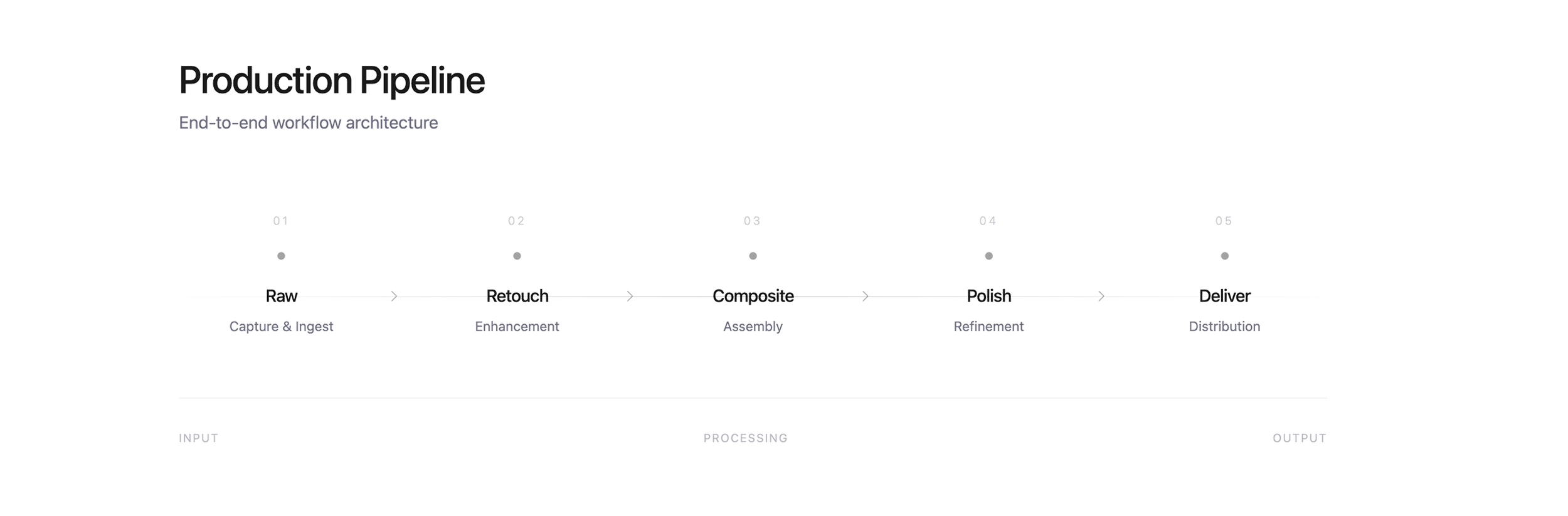
The real challenge for most brands is not finding someone who can edit photos. It is finding a partner who can handle the full production pipeline: from raw capture or AI generation all the way through to marketplace-ready files that look consistent across hundreds of SKUs. That is a very different thing.
The Problem With "Good Enough" Product Photos
You have probably seen the difference yourself while shopping online. One brand has images that feel premium: clean lighting, consistent angles, natural shadows, rich detail. Another brand might have a decent product, but their images look slightly off: mixed white balances, harsh shadows, and different backgrounds from one SKU to the next. The second brand is fighting an uphill battle, no matter how good their product actually is.
The irony is that "good enough" product photography often costs almost as much as doing it properly; it just misses the craft layer that makes the difference. And in e-commerce, where customers cannot touch or try the product, that craft layer is everything.
The agencies that can deliver all of this under one roof are rarer than you might think. Most either specialise in shooting but outsource the retouching, or handle retouching but cannot do CGI or AI-enhanced work. The result is a fragmented workflow with inconsistent output: your packshots look different from your lifestyle images, and your marketplace thumbnails do not match your website hero shots.
What "Comprehensive" Actually Looks Like
When agencies advertise "comprehensive e-commerce product photography and retouching," the word comprehensive can mean wildly different things. Some mean they will shoot your product and do basic cleanup. Others offer a full end-to-end pipeline. Here is what the full pipeline should include:
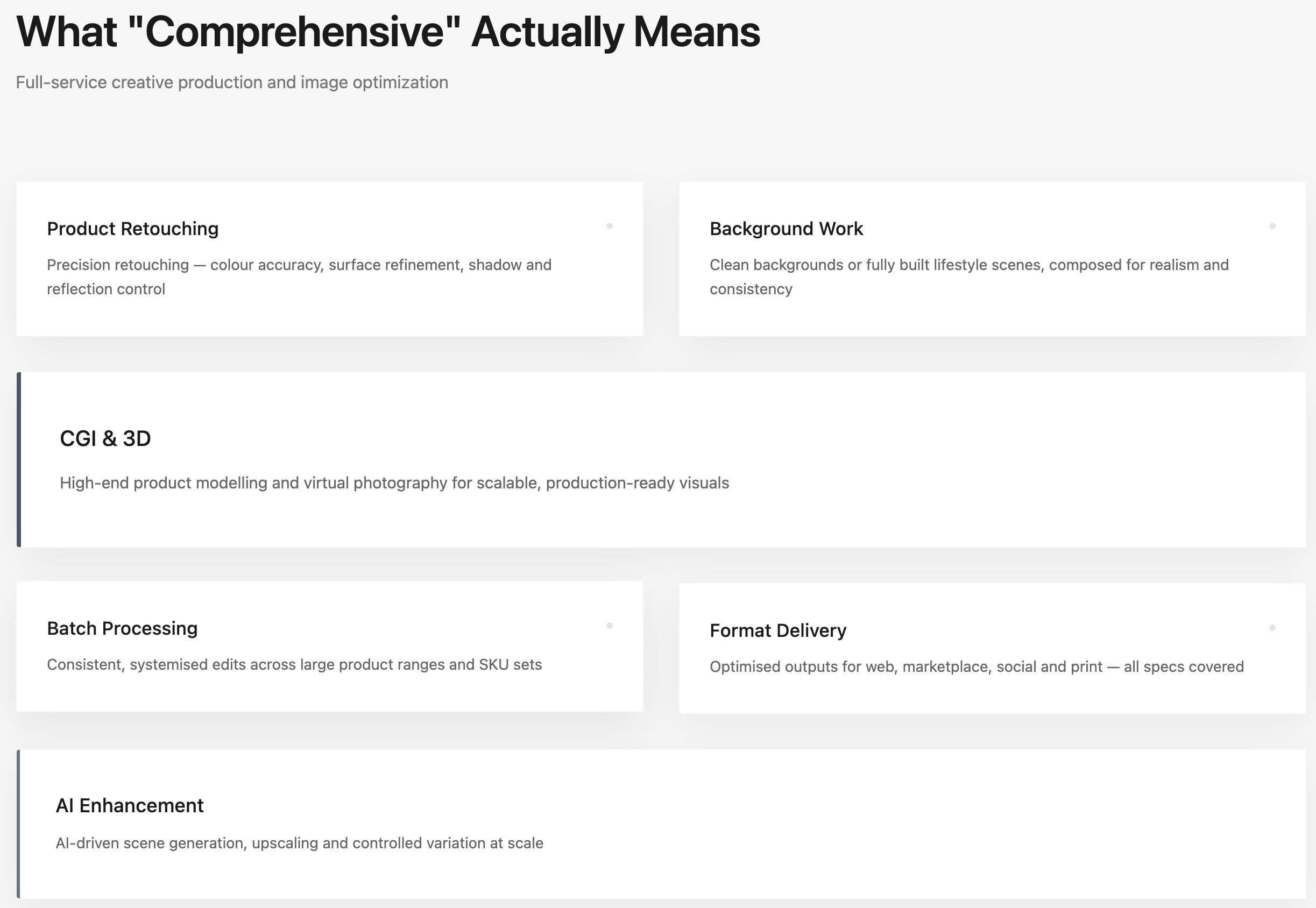
The agencies that can deliver all of this under one roof are rarer than you might think. Most either specialise in shooting but outsource the retouching, or handle retouching but cannot do CGI or AI-enhanced work. The result is a fragmented workflow with inconsistent output: your packshots look different from your lifestyle images, your marketplace thumbnails do not match your website hero shots.
The AI Factor: New Possibilities, Same Standards
AI image generation has opened up genuinely exciting options for e-commerce. Need a product shot in twenty different lifestyle settings? That used to mean twenty different photoshoots. Now it can mean one base image and an experienced post-production team that knows how to generate, composite, and refine those scenes at a fraction of the original cost and timeline.
But here is the important nuance: AI does not lower the standard. It changes the workflow. The final image still needs to meet the same quality bar: accurate colours, natural lighting, consistent brand feel, and print-ready resolution. An agency that uses AI effectively treats it as one tool in a larger toolkit, not a shortcut that replaces skilled hands and trained eyes.
Ask any prospective partner how they use AI in their process. If the answer starts and ends with "we generate images with Midjourney," keep looking. If they talk about AI generation as a starting point that feeds into a professional retouching and compositing workflow, you are in the right conversation.
How to Evaluate a Potential Partner
Finding the right agency is less about checklists and more about asking the right questions. Here are the ones that tend to reveal the most:
"Can you show me a full project, not just hero shots?" Individual images can be cherry-picked. A full-catalogue project shows whether the agency can maintain quality and consistency at scale. Ask to see fifty SKUs from one client, not five.
"What does your process look like from file receipt to delivery?" A well-run agency will have a clear pipeline: ingestion, colour profiling, retouching, QC, and format output. If they cannot articulate this, their process is probably ad hoc.
"How do you handle brand guidelines?" The best partners will ask for your guidelines before you even bring it up. They should want to know your colour standards, your shadow style, your background preferences, and how strict the tolerances are.
"What is your capacity for batch work?" E-commerce is a volume game. An agency that does beautiful one-off retouching but cannot handle a 500-SKU drop consistently is not the right fit for most brands.
"How do you use AI, and where do you choose not to?" This question separates the thoughtful practitioners from the trend-chasers. The best answer involves specifics: "We use AI for background generation and scene extension, but always composite and colour-match manually."
The Return on Getting It Right
The brands that invest in professional product imagery consistently see higher conversion rates, lower return rates, and stronger brand perception. It is one of those areas where the ROI is hard to argue with: customers buy what they can see clearly, trust, and imagine owning.
The key is finding a partner who understands that "product retouching" is not just cleanup work; it is visual communication. Every shadow, every reflection, every colour choice tells your customer something about the quality of what you are selling. Get it right, and the images sell for you. Get it wrong, and no amount of marketing spend can compensate.
“35milimetre handles the full e-commerce production pipeline.
From product retouching and compositing to CGI, AI-enhanced imagery, and multi-format delivery: we have been doing this for over 25 years, working with brands across automotive, tech, FMCG, beverages, and more. Whether you need a handful of hero shots or a full catalogue, we deliver consistent, production-grade results.”
