
What Is Art Direction: A Guide for Visual Creatives

Art direction is defined as the strategic visual oversight of a creative project, governing mood, color, typography, and composition before a single asset goes into production. The role spans advertising, publishing, film, and digital media, ensuring every visual touchpoint works together to communicate one unified message. Understanding what is art direction means recognizing it as a leadership function, not just a design task. It sits at the intersection of creative vision and practical execution, and it shapes whether a campaign feels coherent or chaotic. At 35milimetre, we see the effects of strong and weak art direction every day in the projects that land on our retouching table.
What is art direction, and how does it differ from design?
Art direction is the strategic visual oversight where visual rules are defined before production begins. It governs imagery, composition, color, and tone so that the audience receives a clear, consistent message. That definition separates it from graphic design, which executes assets within a framework that art direction has already established.
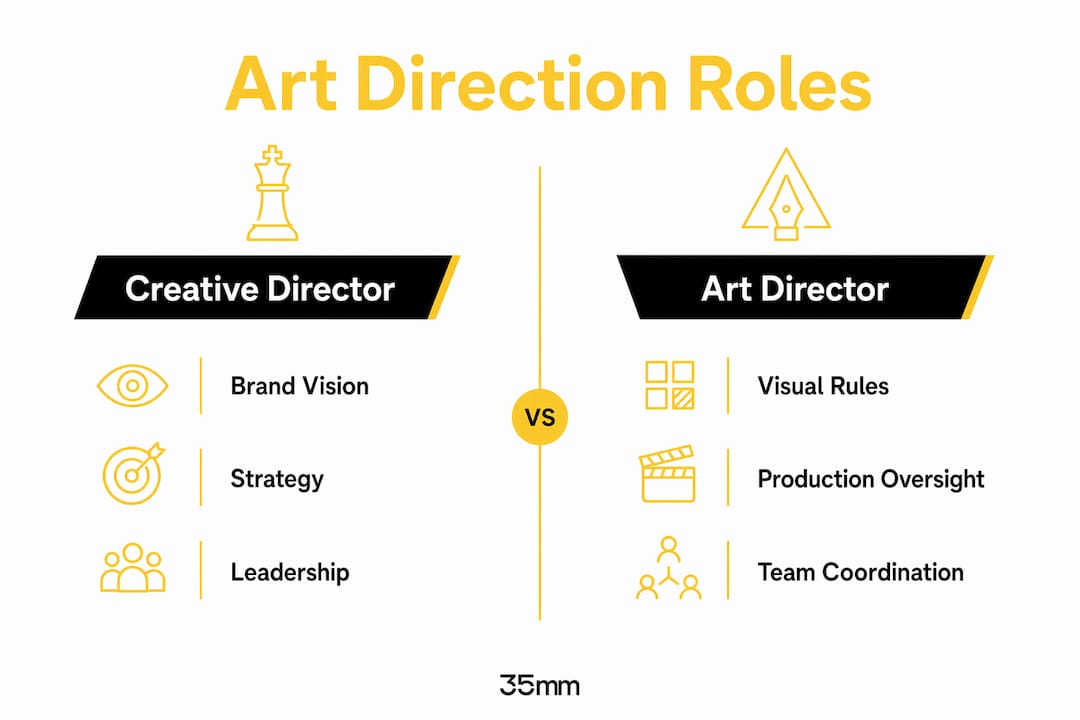
The creative hierarchy works in three distinct layers. Creative directors set the overarching brand vision, art directors translate that vision into a visual system, and graphic designers produce the individual assets within that system. Each layer depends on the one above it. Confusing these roles leads to misaligned deliverables and wasted production time.

Art direction is not about personal taste. Strong art direction controls a visual system so the audience experiences a clear message, not the art director’s aesthetic preferences. That distinction matters enormously in commercial work, where the brand’s communication goals must override individual style choices.
The table below shows how the three roles divide responsibility in a typical campaign.
| Role | Primary focus | Typical deliverable |
|---|---|---|
| Creative director | Brand vision and strategy | Creative brief, campaign concept |
| Art director | Visual system and rules | Mood boards, style guides, asset reviews |
| Graphic designer | Asset execution | Layouts, illustrations, final files |
Knowing where art direction ends and graphic design begins helps creative teams avoid overlap, conflict, and duplicated effort. It also clarifies accountability when a campaign’s visual identity drifts off course.
Why does art direction matter for brand consistency?
Art direction ensures visual cohesion and reinforces a central narrative across every asset in a campaign. Without it, projects lose emotional resonance and fail to build a recognizable brand identity. Audiences may not consciously notice when visual elements are inconsistent, but they feel the disconnect and trust the brand less as a result.
Visual consistency is directly linked to brand trust, and art direction is the mechanism that creates that consistency. When color palettes, typographic choices, and compositional rules stay stable across print, digital, and video, audiences form a clear mental picture of what a brand represents. That mental picture is worth protecting.
Art direction also transforms abstract brand stories into immediate, recognizable visual narratives. Art direction turns design from decoration into purposeful visual storytelling, converting an organization’s values, history, and goals into a visual language that stakeholders recognize instantly. A campaign without that translation layer often looks polished at the asset level but feels hollow at the brand level.
The practical benefits of disciplined art direction include:
- Visual cohesion across print, digital, and broadcast channels, so audiences receive the same brand signal everywhere.
- Narrative clarity that guides viewers through a campaign’s message without confusion or distraction.
- Emotional resonance built through consistent mood, color temperature, and typographic voice.
- Production efficiency, because defined visual rules reduce revision cycles and approval delays.
- Brand equity, accumulated over time when audiences repeatedly encounter a coherent visual identity.
Pro Tip: Build your visual rules into a one-page style reference before briefing any collaborator. A single document covering color values, approved typefaces, and composition principles cuts revision rounds significantly.
What skills and challenges define effective art direction?
Art direction requires balancing opposing forces: brand constraints on one side and genuine creative ambition on the other. The best art directors hold that tension as a productive equilibrium rather than letting one side collapse into the other. That balance is a skill developed over years, not a technique learned in a weekend course.
The art director acts as a translator and buffer, managing fluctuating client feedback to protect the visual integrity of a project during production. Client feedback often arrives as emotional reactions rather than clear creative direction. The art director’s job is to decode that feedback, extract the legitimate concern, and translate it into a visual adjustment that serves the project without derailing it.
Art direction is both creative leadership and project management, requiring aesthetic judgment, communication skills, and administrative oversight in equal measure. Many creatives underestimate the administrative side. Reviewing mockups, running briefings, presenting to clients, and approving final assets are all part of a working art director’s day.
Knowing when to trust collaborators and avoid over-editing leads to stronger creative results. Experienced art directors delegate creative energy while maintaining visual focus. Micromanaging a photographer’s lighting choices or a designer’s typographic decisions erodes trust and produces blander work. The art director sets the rules, then steps back enough to let collaborators bring their own skill to the table.
Pro Tip: When client feedback feels vague or contradictory, ask one clarifying question: “What should the audience feel when they see this?” That single question usually surfaces the real concern faster than any amount of back-and-forth on visual details.
How does art direction work across advertising, film, and digital media?
Art direction practices vary across advertising, film, publishing, and digital media but share core principles of cohesion and visual narrative. The tools and workflows differ by medium, but the underlying discipline stays the same: define the visual rules, communicate them clearly, and enforce them consistently throughout production.
In advertising, art direction begins with mood board creation. The art director assembles reference imagery, color swatches, typographic samples, and compositional examples to establish the campaign’s visual tone before any original asset is created. That mood board becomes the shared reference point for photographers, retouchers, copywriters, and designers throughout the project. At 35milimetre, we receive mood boards from art directors regularly, and the quality of that document directly predicts the smoothness of the post-production process.
In film, art directors oversee set aesthetics and liaise with multiple departments, including costume, lighting, and props, to maintain a consistent visual world. In publishing, they collaborate with editors to align visual style with editorial tone. In digital media, art direction governs everything from social media grid aesthetics to the color grading of video content. The medium changes; the oversight function does not.
The table below summarizes how art direction applies across four major sectors.
| Sector | Core art direction task | Key collaborators |
|---|---|---|
| Advertising | Mood board creation, campaign visual rules | Photographers, retouchers, copywriters |
| Film | Set design oversight, department coordination | Production designers, cinematographers |
| Publishing | Visual style alignment with editorial content | Editors, illustrators, layout designers |
| Digital media | Grid aesthetics, color grading, UX visual tone | UI designers, video editors, social teams |
Translating client briefs into compelling visual concepts and coordinating creative teams is the daily reality of art direction work. The role demands fluency in multiple creative languages, from photography and illustration to typography and motion. That breadth is what makes art direction one of the most demanding and most rewarding positions in visual production. For creatives building their skills in visual content creation, understanding how art direction sets the rules for every downstream asset is the clearest path to producing work that holds together.
Key Takeaways
Art direction is the strategic visual oversight that defines the rules governing color, composition, and tone before production begins, making it the foundation of every coherent creative campaign.
| Point | Details |
|---|---|
| Art direction precedes production | Visual rules for color, type, and composition must be set before any asset is created. |
| Three-tier creative hierarchy | Creative directors set vision; art directors build visual systems; designers execute assets. |
| Cohesion drives brand trust | Consistent visual language across channels builds audience recognition and brand equity. |
| Balance is the core skill | Effective art directors hold brand constraints and creative ambition in productive tension. |
| Medium changes, principles stay | Art direction governs advertising, film, publishing, and digital media through the same core discipline. |
Art direction as a practice, not just a title
We have worked alongside art directors for over two decades at 35milimetre, and the clearest pattern we have observed is this: the title matters far less than the mindset. The art directors who produce the most consistent, memorable work are not the ones with the most refined personal taste. They are the ones who treat visual coherence as a non-negotiable standard and then build systems that protect it, even when client feedback, budget pressure, or tight deadlines push against it.
The most common mistake we see from newer art directors is conflating their personal aesthetic with the project’s visual needs. Those are two different things. Your job is to serve the message, not to express yourself. The moment you confuse the two, the work starts to drift.
What we find genuinely rewarding about art direction as a discipline is that it rewards experience in a way that pure technical skill does not. A retoucher gets faster and more precise with practice. An art director gets better at reading a room, anticipating problems, and building the kind of trust with collaborators that produces work no one person could have made alone. That compound growth is what makes creative direction and visual storytelling such a long game worth playing.
If you are early in your career, focus less on building a signature style and more on building a reliable visual vocabulary. Learn to articulate why a composition works, not just that it does. That analytical habit is what separates art directors who grow from ones who plateau.
— 35mm
How 35milimetre supports your art direction vision
Strong art direction sets the rules. Post-production is where those rules are either honored or lost.
At 35milimetre, our post-production and commercial retouching services are built to work directly from an art director’s visual brief. Whether that means matching a precise color grade across a product campaign, compositing CGI elements into photography, or refining imagery to meet the exact mood a mood board established, we treat the art director’s visual system as the standard we are accountable to. Our team of post-production artists, graphic designers, and 3D artists has delivered high-end visuals for major brands in technology and automotive sectors, always working within the creative framework the art director has defined. If your next project needs post-production that respects and reinforces your visual direction, we are ready to talk.
FAQ
What is art direction in simple terms?
Art direction is the strategic oversight of a creative project’s visual elements, including color, composition, typography, and mood. It ensures every asset communicates a unified message rather than a collection of individual design choices.
How does an art director differ from a graphic designer?
An art director defines the visual system and rules for a project. A graphic designer executes individual assets within that system. The art director leads; the designer produces.
Why is art direction important in advertising?
Art direction in advertising ensures visual cohesion across all campaign assets, which reinforces the central narrative and builds audience recognition. Without it, campaigns lose emotional consistency and brand identity weakens.
What skills does an art director need?
Art directors need aesthetic judgment, communication skills, and project management ability in equal measure. The role requires translating abstract brand goals into concrete visual rules and managing creative teams to execute them.
Can art direction apply to digital media and social content?
Art direction applies to every visual medium, including digital media, social content, and video. In digital contexts, it governs grid aesthetics, color grading, and typographic consistency across platforms.
