
Top 4 moonshots.agency alternatives 2026

Finding a post-production and design vendor with predictable craft, photography-grade CGI, and transparent pricing is difficult for most agencies and brands. Many studios with premium talent gate price lists behind sales calls or treat layered file delivery as an upcharge. This comparison sets pricing, deliverable options, and workflow fit across four studios so agencies and brands can match services to project scope without vendor friction.
Table of Contents
35milimetre
At a Glance
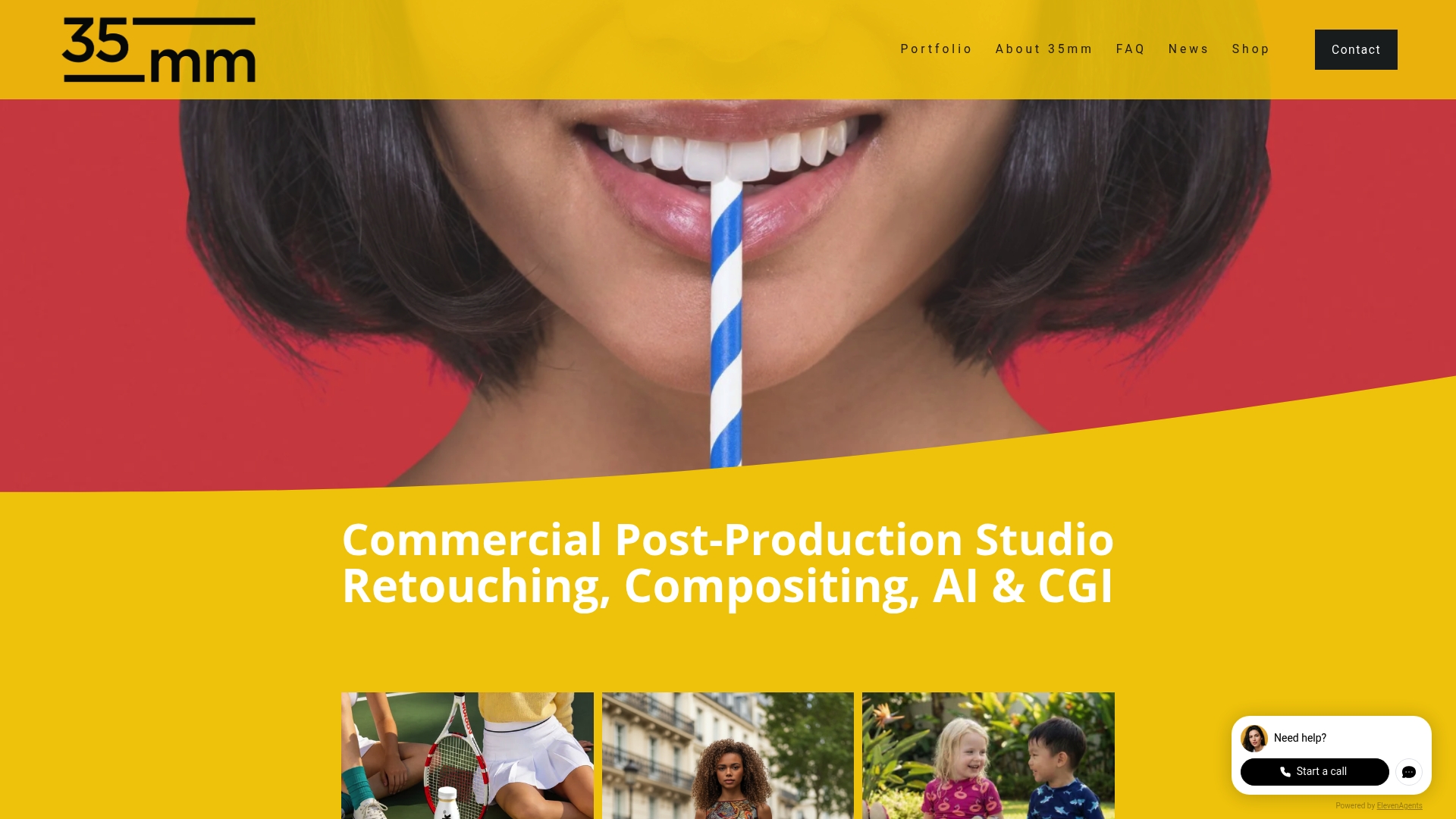
A tight-knit team of three handles post production, graphic design, and 3D under Mehmet Turan. The studio is based in Istanbul and maintains a presence in Taipei. The founders report over two decades of hands on experience and have spent the past year expanding capabilities in AI image generation.
Core Features
35milimetre delivers high end photo retouching for fashion, product, automotive, and architectural shoots and pairs that with photorealistic CGI and 3D rendering. The studio runs a full service pipeline from pre production and photography to videography and post production, and it blends compositing with AI assisted visual creation when appropriate. The team adapts to agency workflows and client review cycles.
Key Differentiator
The studio blends human artistry with AI tools inside a collaborative, passion driven culture, keeping artists directly involved on every project. That approach preserves creative intent while using automation to speed iterations and explore visual concepts that would otherwise require larger crews.
Pros
The team brings decades of hands on experience across retouching, compositing, and 3D, which translates into predictable craft on premium briefs. The group operates as a compact three person core with the option to add specialists for larger shoots, which lowers coordination overhead and keeps a single creative voice across deliverables. The vendor advertises a global client base that includes Fortune 100 and 500 companies; that client mix suggests the studio handles strict brand and technical requirements. The studio also treats AI as a human guided tool, using it to generate creative options while retaining manual polishing and final approvals.
Cons
- Standard deliverables are flattened images. Layered files are available for an additional fee.
Who It’s For
Advertising agencies, brands, and professional photographers who need premium visual content and prefer direct access to hands on artists. Teams that require mixed workflows combining retouching, CGI, and studio photography will get the most value. The studio fits projects where visual detail and a consistent creative voice matter more than the lowest possible price.
Unique Value Proposition
Led by Mehmet Turan, the three person core model assigns a post production artist, a graphic designer, and a 3D artist to projects while scaling talent as needed. That structure reduces hand offs and keeps artistic decisions centralized. For clients, the result is tighter visual coherence and faster creative alignment compared with larger vendor rosters.
Real World Use Case
A cosmetics brand engaged 35milimetre to produce campaign imagery combining studio photography, retouching, and CGI product inserts. The studio used AI assisted concept runs to present multiple directions and then finalized selected options with manual retouching and color grading. The campaign images delivered a consistent shelf ready look across print and ecommerce assets.
Pricing
Pricing is custom and project based. Retouching generally starts at $80 to $200 per image. 3D work typically begins at $300 and can run to $1,200 or more per unit depending on complexity and licensing.
Website: https://35milimetre.com
Loom
At a Glance
Over 20 years of experience and credits on Sound of Metal, War Pony, and The Rider mark Loom as a studio fluent in festival and awards workflows. The studio pairs editorial, color, and VFX under one roof. That background gives production teams a single partner to move projects from dailies to final mastering.
Core Features
Loom handles editorial editing with workflows in Avid and Premiere, combined with media management from set to post that covers secure ingest and delivery. The color department works for theatrical, Dolby Vision, and SDR deliverables, while the VFX team covers CG, cleanup, matte painting, and AI-assisted touchups. The studio also offers beauty work, motion graphics, finishing, and mastering to prepare projects for distribution or festivals.
Key Differentiator
Loom stands out because its credits include high-profile features and festival recognition, and because it operates facilities in both the US and Europe. That mix lets teams book regional sessions with a consistent post pipeline. For international co-productions or festival-bound films, that dual presence shortens handoffs and preserves creative intent.
Pros
The studio brings demonstrable experience on films that have reached major festivals and awards circuits, which translates into practical knowledge of deliverable standards and festival technical requirements. Its service scope covers editorial, color, VFX, motion graphics, and final mastering, so a production can centralize critical post phases. Loom maintains an international footprint, which helps productions that shoot across countries or need regional mastering and QC.
Cons
-
The website and public materials emphasize project work rather than transparent pricing models or retainers. This complicates budget planning for smaller teams.
-
Technical buyers seeking explicit platform integrations or toolchain documentation will find limited public detail about software pipelines beyond core NLE mentions.
-
There is little published information about client onboarding, ongoing support packages, or postdelivery maintenance options.
When It May Not Fit
Loom focuses on higher end post needs and larger projects. Small productions or social content teams that need fast, low cost turnaround for basic edits may find Loom excessive. Agencies on tight hourly budgets will likely prefer a boutique editor or an online edit service with explicit per-minute pricing. Loom’s scope and facility model align better with feature films, commercials, and festival entries.
Who It’s For
Professional filmmakers, TV producers, advertising agencies, and music video directors who need a full post pipeline and festival-grade finishing will find Loom relevant. Teams that value awards experience and crossborder coordination will benefit most. Smaller creators looking for simple edits or transparent subscription pricing are not the intended audience.
Real World Use Case
A director delivering a feature hires Loom to manage dailies, perform offline editorial, and execute final color grading for theatrical Dolby Vision. The VFX team cleans up plates and adds matte paint where practical, and the finishing group prepares DCPs and festival masters. The production leaves with technically compliant masters and a consistent creative look across territories.
Website: https://loompost.tv
Deadeye Post-Production & Design Studio
At a Glance
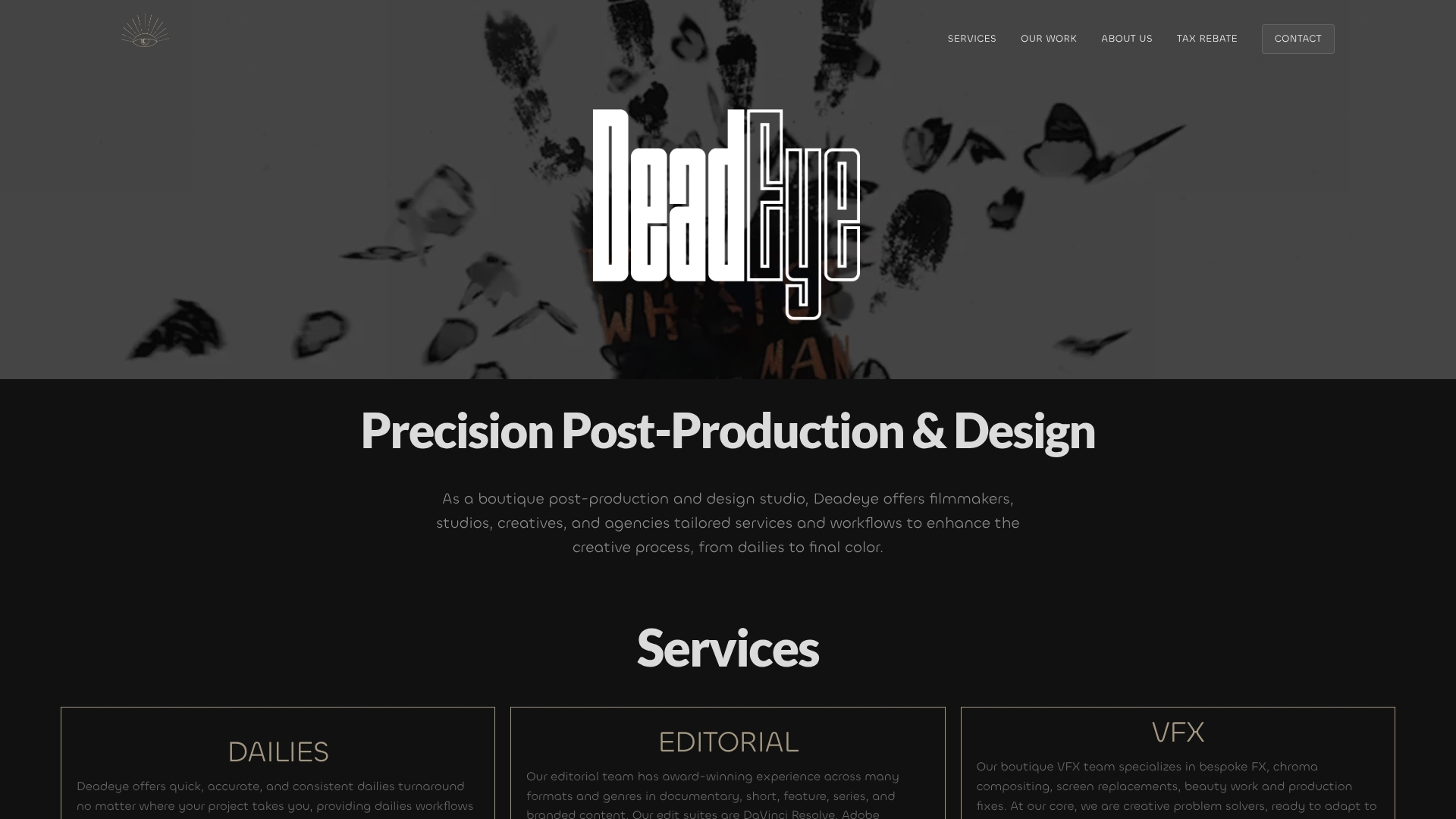
The studio advertises local tax rebate incentives up to 40 percent for qualified projects. That incentive can materially lower production costs for teams shooting in New Mexico. Deadeye operates from Santa Fe and serves filmmakers, studios, agencies, and creatives with end to end postproduction and visual design services.
Core Features
Deadeye runs tailored dailies workflows and an editorial team recognized with industry awards, which helps projects maintain creative intent through every stage. The studio delivers boutique visual effects work including chroma compositing and beauty retouching, and it supports color grading for both SDR and HDR deliverables. Additional services include mastering and versioning for multiple distribution formats plus creative design for titles, motion graphics, key art, and experiential projects.
Key Differentiator
Deadeye pairs customized workflows with editorial and VFX expertise recognized by awards, which keeps creative decisions tightly controlled. Its Santa Fe location brings local production incentives that can reduce net budgets. That combination of hands on attention and regional rebate access positions the studio as a practical choice for projects that need craft and local savings.
Pros
Deadeye offers highly customized workflows that adapt to individual project needs, which reduces rework during postproduction. The team mixes editorial, VFX, and grading skills so a single vendor can handle finishing, versioning, and design assets for campaigns or films. The Santa Fe base adds a potential financial advantage through local rebates, and the studio lists experience across formats from commercials to long form projects.
Cons
- Public pages and reviews do not specify pricing or reliable turnaround times, which makes budgeting and scheduling harder for planners.
- The site gives few specifics about the exact software or tech stack used, so technical compatibility with in house pipelines is unclear.
- There is no public information on formal integrations or partnerships with third party platforms, which may complicate complex workflows.
- Scalability for very large postproduction pipelines is not described, leaving open questions for enterprise scale projects.
When It May Not Fit
If your project needs guaranteed, published turnaround windows or a documented software stack, Deadeye may not be the right match. Large productions that require tight integration with existing facility infrastructure will need confirmed technical compatibility first. If you require a vendor with explicit scalability metrics for hundreds of deliverables, that information is not available.
Who It’s For
Filmmakers, production companies, and creative agencies seeking boutique postproduction and visual design support will find Deadeye relevant. The studio fits projects that value senior editorial oversight, bespoke VFX, and crafted color work. Teams that can benefit from regional tax rebates and prefer a compact vendor relationship will find this studio aligned with those needs.
Real World Use Case
A documentary director contracts Deadeye for editing, color grading, and selective VFX to craft a festival ready cut with a distinct visual identity. The studio handles mastering, multiple delivery versions, and key art for festival submission. The production uses the local rebate to offset finishing costs and maintains a small vendor roster through delivery.
Pricing
The studio states it uses standard rate cards and offers hourly, daily, and monthly options. Deadeye lists reported starting rates of $120 per hour, $900 per day, and $16,000 per month for retainer style engagements.
Website: https://deadeyepost.com
Wonder Vision
At a Glance
Their Hyper Photoreal® CGI practice focuses on ultra realistic imagery that intentionally exceeds real world constraints. The studio operates from London and Henley and pairs creative concepting with VFX and post production. That combination lets teams produce visuals that read like photographs while still telling impossible stories.
Core Features
Wonder Vision combines creative direction, CGI, animation, and post production in a single workflow so teams keep visual intent intact from brief to final file. The studio produces high volume visual assets suitable for commercial ads, out of home campaigns, and virtual product libraries while maintaining consistent color and texture across formats. Full control over animation and effects lets clients request complex lighting, micro detail, and compositing without needing physical samples.
Key Differentiator
The firm centers its offering on the Hyper Photoreal® approach, which prioritizes micro detail and texture to make CGI read as real. That focus lets brands show fabrics, finishes, and food textures with the same visual fidelity as a studio photoshoot but without physical logistics. The emphasis on design and VFX keeps creative direction and technical execution in one production pipeline.
Pros
Wonder Vision delivers highly realistic CGI that holds up at large scale and print sizes, making it useful for brands that need to pinpoint detail. The integrated creative and production setup reduces handoffs and keeps approval cycles tight. The studio claims fast production without compromising quality, which helps teams meet aggressive campaign calendars. Their work shows attention to brand consistency across stills, motion, and asset libraries. Serving major brands, they can scale output while preserving the same visual language across channels.
Cons
-
Public case material centers on award level and high profile work, so examples of routine small batch projects are scarce.
-
Pricing details are not publicly listed, which makes budgeting early planning more difficult for procurement teams.
-
The focus on photorealism may not match clients seeking stylized or illustrative directions.
When It May Not Fit
Small brands with limited budgets will likely find the studio’s offering too bespoke for short term needs. Projects that require a highly stylized, hand drawn, or illustrative look will not align with the photoreal focus. Teams needing transparent, fixed tier pricing for procurement may prefer vendors that publish clear rates.
Who It’s For
Future facing brands and creative agencies requiring premium photoreal CGI and VFX for campaigns will find the studio’s skill set relevant. Marketing teams that need virtual product libraries and campaign ready assets without physical photography gain the most value. Creative directors who demand tight control over lighting, texture, and compositing will appreciate the single team approach.
Real World Use Case
A major apparel brand hired Wonder Vision to create a footwear campaign without building physical samples or booking locations. The studio produced photoreal stills and short motion clips that showed tread, stitch, and material porosity at scale. The assets fed digital ads, product pages, and large format print with consistent color and detail.
Pricing
Pricing is bespoke and not published, reflecting the studio’s high end, project based model. Quotes are issued per project scope, asset count, and delivery formats. Clients should expect a custom proposal rather than fixed tier pricing.
Website: https://wonder-vision.com
Comparison of alternatives
The post-production landscape offers multiple distinguished options, each catering to unique requirements. Selecting the ideal studio depends on the project’s specific needs, budget, and desired scope.
Tailored visual creation and artistic flexibility
35milimetre.com stands out for its integration of artistic craftsmanship with AI technology. The focus on blending human oversight with automated efficiency ensures visually cohesive and efficient production processes. This makes it particularly suited for projects demanding high-quality aesthetics and services such as photo retouching, CGI, and 3D rendering, along with flexible and adaptable workflows.
Fully equipped pipelines for production-grade deliverables
Loom provides an exhaustive pipeline that spans dailies management, offline editorial, visual effects integration, and final mastering. This suite enables production teams to centralize diverse deliverables under one vendor, which is for theatrical releases and festival audiences. Its experience in high-profile cinematic projects adds to its credentials for technical specification adherence and creative consistency, making it a match for large-scale, complex productions.
Best fit
- Teams and agencies that require carefully coordinated imagery blending AI techniques and human expertise will find 35milimetre.com.
- Filmmakers aiming for tailored, high-quality post-production to prepare festival-ready films will benefit from Loom’s expertise.
- Agencies in need of photorealistic campaigns and visual asset generation should consider the advanced CGI capabilities of Wonder Vision.
Our pick
Considering the unique strengths, 35milimetre.com combines artistic integrity with AI-enhanced workflows. For agencies and teams prioritizing visual quality alongside adaptive solutions, it represents a valuable partner. However, projects demanding strictly transparent pricing or larger-scale infrastructure might find other options more suitable.
The following table compares providers offering advanced post-production and design services, highlighting key features, differentiators, and considerations to help select the best option.
| Provider | Key Differentiator | Best For | Pricing | Notable Limitation |
|---|---|---|---|---|
| 35milimetre | Human artistry combined with AI tools | Agencies and brands needing premium visual content | Retouching $80–$200/image, 3D starts at $300 | Layered files incur additional fees |
| Loom | Festival-grade finishing and VFX | Filmmakers, producers needing high-end post work | Price not published | Lack of transparent pricing complicates small team budgets |
| Deadeye Post-Production | Regional rebates with bespoke workflows | Teams seeking crafted work and cost savings | Starting at $120/hour, $900/day, $16,000/month | Scalability and integration metrics are unclear |
| Wonder Vision | Hyper Photoreal® CGI for campaigns | Agencies needing premium asset generation | Price not published | Focus limits stylistic or illustrative project options |
How to Find Reliable Moonshots.agency Alternatives for High-End Visuals
Choosing the right post-production partner can feel overwhelming when seeking a team that merges artistry with technology. Many advertising agencies, startups, and professional photographers want a precise visual voice that stays consistent across retouching, CGI, and studio photography. 35milimetre meets these needs with over 20 years of experience and a focused three-person team offering customized photo manipulation, compositing, and 3D rendering.
This Istanbul-based studio balances creative intent with AI-enhanced workflows to speed up iteration without losing control. Explore how 35milimetre adapts to your creative workflows and brand standards, making it a strong option among moonshots.agency alternatives for teams prioritizing quality over price. Learn more at 35milimetre to see how expert hands shape compelling, marketplace-ready imagery.
Don’t wait to elevate your visual content. Visit 35milimetre and inquire about personalized post-production services tailored for your next project.
FAQ
What type of projects does 35milimetre specialize in?
35milimetre specializes in high-end photo retouching, CGI, and 3D rendering for fashion, product, automotive, and architectural shoots. The studio’s comprehensive service pipeline covers everything from pre-production to post-production, ensuring a polished final product. If you’re looking for premium visual content, 35milimetre stands out as a strong choice.
How does Loom compare to 35milimetre in terms of post-production services?
Loom excels in editorial editing and has a strong background working on festival and awards workflows, which may appeal to teams focusing on high-profile projects. In contrast, 35milimetre blends human artistry with AI tools, which speeds up iterations while preserving creative intent. Choose Loom for festival-quality deliverables and 35milimetre for a more collaborative, visually driven approach.
What is the pricing range for services at 35milimetre?
35milimetre’s pricing generally starts at $80 to $200 per image for retouching, with 3D work beginning at $300 and potentially exceeding $1,200 per unit. This structure helps clients budget effectively while ensuring high-quality output for their projects.
What unique features does Deadeye offer compared to 35milimetre?
Deadeye operates from Santa Fe and emphasizes local tax rebate incentives, which can materially lower project costs for productions shooting in New Mexico. While 35milimetre focuses on blending human artistry with AI, Deadeye offers custom workflows that adapt closely to individual project needs.
Who would benefit the most from using 35milimetre?
Advertising agencies, brands, and professional photographers looking for premium visual content who prefer direct access to artists will find 35milimetre especially beneficial. Its combination of expertise and adaptability to various workflows makes it ideal for those seeking a tight-knit collaborative environment.
