
Ecommerce Packaging Design Guide for Brand Owners

Your packaging arrives damaged, the product shifts around inside, and a frustrated customer posts a photo online before they even see what’s inside. That’s the packaging failure scenario more ecommerce brands live through than they’d care to admit. A solid ecommerce packaging design guide addresses exactly this: how to move from reactive fixes to a deliberate system that protects your product, tells your brand story, and makes customers want to buy again. This guide walks you through every stage, from gathering requirements and choosing materials to testing, sustainability, and the visual presentation that turns a brown box into a brand asset.
Table of Contents
- Key Takeaways
- Your ecommerce packaging design guide starts here
- Structure, style, and material selection
- Graphic design and branding that makes packaging stand out
- Production preparation and testing
- Sustainability and customer experience
- My honest take on packaging design mistakes
- How 35milimetre brings your packaging to life visually
- FAQ
Key Takeaways
| Point | Details |
|---|---|
| Start with a detailed brief | Define product dimensions, fragility, and customer profile before any design work begins. |
| Layer your packaging structure | Use outer, inner, and product-facing layers to balance protection with unboxing experience. |
| Design for usability first | 52.7% of consumers will pay more for easy-to-open packaging, making usability a revenue factor. |
| Test before you print at scale | Drop, compression, and vibration tests prevent costly returns and brand damage. |
| Treat sustainability as strategy | Reducing package size and adding disposal guidance builds trust and cuts shipping costs. |
Your ecommerce packaging design guide starts here
Before you sketch a single concept or brief a printer, you need a clear picture of what your packaging actually has to do. The industry term for this stage is the packaging brief, and a complete brief that includes precise product dimensions, weight, protection requirements, and legal labeling needs dramatically reduces sample rejections and production delays down the line.
Start by defining your product’s physical reality. What are the exact dimensions and weight? Is it fragile, temperature-sensitive, or subject to regulatory requirements like ingredient lists or safety warnings? These answers determine your structural options before aesthetics even enter the conversation.
Next, know your customer and your channel. A product sold through your own Shopify store ships differently than one sold through a marketplace with strict packaging rules. Your customer’s expectations around unboxing, sustainability, and branding also vary significantly depending on their demographics and how they discovered you. A skincare brand selling to Gen Z on TikTok needs a very different packaging approach than a B2B equipment supplier.
Finally, gather your brand assets and set a realistic budget. Logo files, brand color codes, approved typefaces, and photography guidelines all need to be in hand before a designer touches the layout. Budget constraints shape material and printing choices, and knowing them upfront prevents expensive pivots mid-project.
Pro Tip: When writing your packaging brief, treat it like a creative handoff document. Reference how to brief a creative studio to structure your requirements clearly and get better results from every vendor you work with.
Structure, style, and material selection
Once your brief is solid, the structural decisions begin. This is where most ecommerce brands make their first costly mistake: choosing packaging that looks great on a shelf but fails in a fulfillment center.
Ecommerce packaging works in layers: the outer shipping box handles protection and carrier handling, inner elements like tissue paper, foam inserts, or air pillows provide cushioning, and the product-facing packaging handles presentation. Treating these as one design problem instead of three is what leads to damaged goods and disappointed customers.
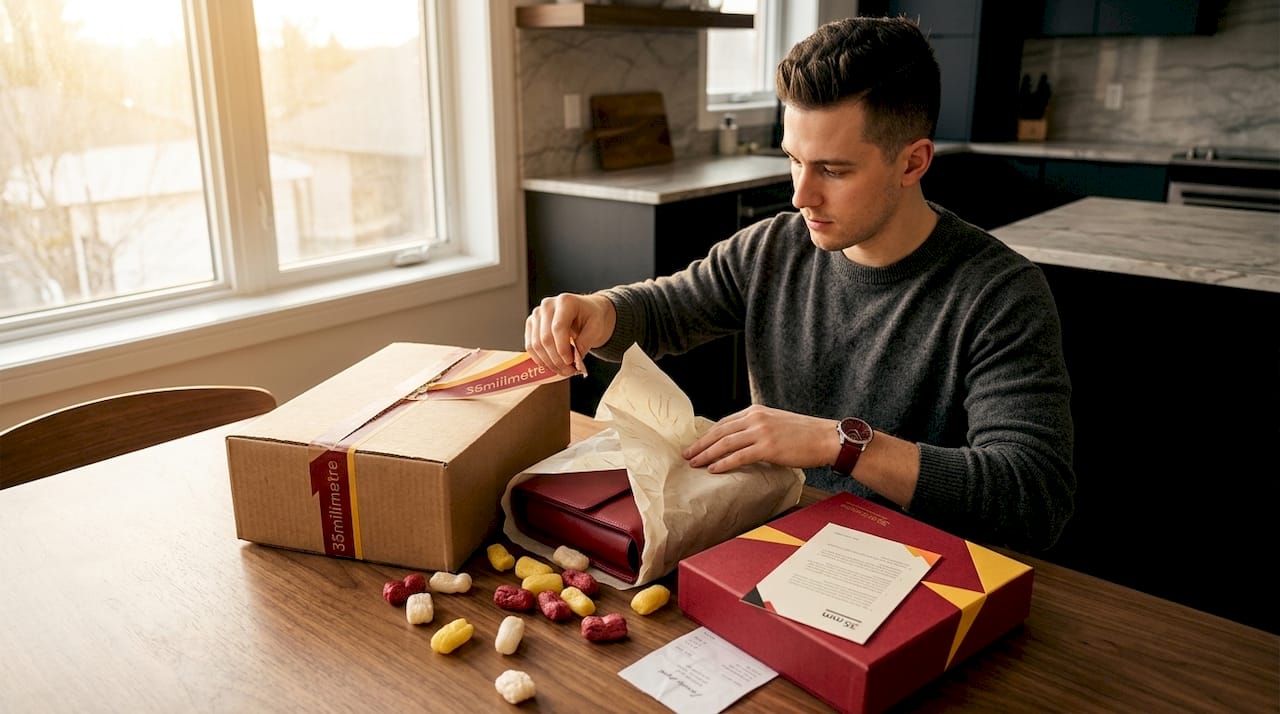
Here is a quick comparison of the most common box styles for ecommerce use:
| Box style | Best for | Key trade-off |
|---|---|---|
| Folding carton | Light, non-fragile products | Low cost but limited structural strength |
| Corrugated box | Heavy or fragile items | Excellent protection, higher material cost |
| Rigid box | Premium, gift-ready products | Superior unboxing feel, expensive to ship |
| Mailer box | Subscription boxes, apparel | Good branding surface, less cushioning |
Material choices carry both functional and reputational weight. Cardboard remains the workhorse of ecommerce, but biodegradable options like kraft paper, molded pulp, and compostable mailers are now mainstream and expected by many shoppers. Plastic inserts offer excellent protection but create disposal friction. Glass and metal packaging add perceived value but drive up shipping costs and damage risk.
Using the smallest possible box and minimizing inserts cuts shipping costs and reduces material waste simultaneously. This is one of the rare cases in ecommerce where the environmentally responsible choice is also the financially smart one.
Pro Tip: Order sample boxes in three size variants before committing to a run. The difference between a 10mm gap and a 30mm gap around your product changes your void fill requirements, your dimensional weight charges, and your unboxing experience all at once.
Graphic design and branding that makes packaging stand out
Structure protects the product. Graphics sell the brand. These two goals need to coexist on the same surface, and the tension between them is where most packaging design either succeeds or falls apart.
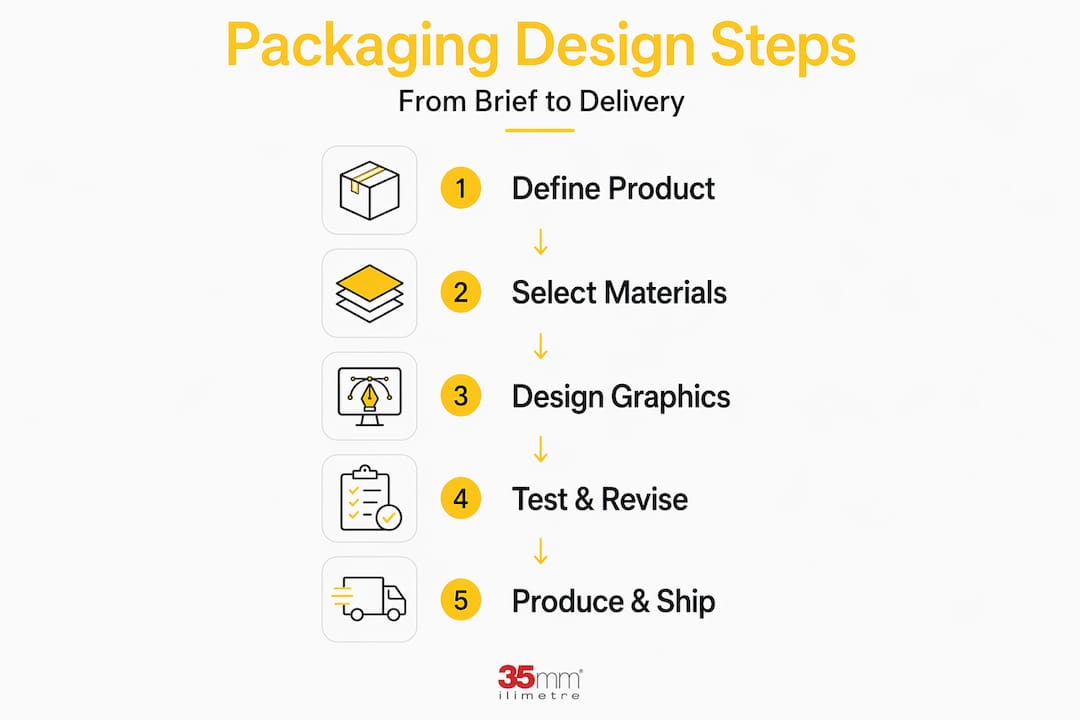
Packaging design impacts brand trust for 96% of customers, which means every visual choice on your box is doing active work on your reputation. Logo placement, typography, color blocking, and imagery should all reinforce a single coherent brand impression rather than compete for attention. The most effective ecommerce packaging communicates one dominant message clearly, whether that is premium quality, playful personality, or environmental commitment.
A few principles that hold across categories:
- Place your logo where it appears on top when the box is sealed, not hidden under a flap
- Use no more than two typefaces and ensure body text is legible at arm’s length
- Repeat key brand colors on both the inside and outside of the packaging to reward unboxing
- Include one human touch, whether a thank-you card, a custom pattern on inner tissue, or a personalized message, to create an emotional moment
The unboxing experience is not a nice-to-have. It is a shareable brand asset. Customers who record and post their unboxing extend your reach to audiences you did not pay to reach. Visual content that drives this behavior starts with packaging that gives them something genuinely worth showing.
Pro Tip: Design your packaging to photograph well under natural light. Many of your customers will open their order near a window, and packaging that looks stunning in that context gets shared far more often than packaging designed only for studio shots.
Production preparation and testing
Great design files mean nothing if they produce bad prints. This stage is where ecommerce brands frequently lose money, and the causes are almost always preventable.
Here is the standard production preparation sequence that professional studios follow:
- Confirm your dieline. Get the structural template from your printer and design within it. Never create artwork on a generic template.
- Set up files in CMYK. RGB artwork converted at print will shift colors unpredictably. Start in the correct color mode.
- Add bleed and check safe zones. Common print failures stem from artwork placed outside safe zones and missing bleed, which causes white edges after cutting.
- Request a pre-production sample. Always review a physical sample before approving a full run. What looks correct on screen can read differently on kraft paper or a glossy laminate.
- Conduct structured physical tests. Run drop tests from at least 1 meter, shake tests with products loaded, and compression tests that simulate stacking during transit.
- Test usability. Have someone unfamiliar with your packaging open it without instructions or tools. If they struggle or damage the product during opening, your design needs to change.
Here is a quick reference for the core packaging stress tests:
| Test type | What it checks | Pass condition |
|---|---|---|
| Drop test (1m) | Impact resistance | No structural failure or product damage |
| Compression test | Stack strength in transit | Box holds shape under simulated pallet load |
| Vibration test | Freight movement simulation | No shifting, rattling, or internal damage |
| Usability test | Ease of opening | Opened in under 60 seconds without tools |
Shopify’s 2026 packaging workflow specifically flags both protection and ease-of-opening tests as non-negotiable steps before any production run. This reflects a broader shift in how ecommerce brands think about packaging: not just as a container, but as part of the product experience itself.
Pro Tip: Ask your printer for a digital proof AND a hard-copy proof before approving print. Color accuracy varies by substrate, and a UV-coated surface reads differently than an uncoated kraft board even from identical CMYK files.
Sustainability and customer experience
Sustainable packaging is no longer a premium differentiator. For a growing share of shoppers, it is a baseline expectation. Getting this wrong costs you customers quietly, through non-repurchase rather than public complaints.
Effective sustainable packaging works across the whole value chain: reducing material volume, sourcing responsibly, optimizing transport efficiency, and choosing materials with known end-of-life pathways. Switching to a recycled material while keeping an oversized box misses the point entirely.
Practical steps that make a measurable difference include:
- Right-size your packaging to eliminate void fill wherever possible
- Use recyclable or compostable materials and print the disposal method directly on the packaging
- Avoid mixed-material construction that makes recycling impossible, such as foam glued to cardboard
- Source locally when feasible to reduce transport emissions without added cost
Beyond environment, there is the direct customer experience argument. Hard-to-open packaging frustrates most consumers, and over half of shoppers are willing to pay more for resealable, easy-open designs. When your packaging fights the customer, you lose the loyalty moment that the entire fulfillment process was building toward.
Packaging is the last physical touchpoint in an ecommerce transaction. It is the one still frame that stands in for the entire in-store experience your customer never had. When it reflects your values, protects what they ordered, and opens without a fight, it does the brand-building work that no ad spend can replicate.
My honest take on packaging design mistakes
I’ve spent years working on visual production for ecommerce brands, and the single most consistent mistake I see is treating packaging as an afterthought to the product launch rather than part of the product itself. Brands invest months in product development and two weeks in packaging, then wonder why conversion rates drop after the first customer photos appear online.
What I’ve learned from working closely with brand managers is that the tension between flashy design and practical usability is real, and most brands resolve it the wrong way. They prioritize the concept art that wows in a presentation and underinvest in the physical testing that determines whether real customers actually enjoy receiving the product. A box that photographs beautifully but ships battered is worse than a plain box that arrives perfectly, because it signals a gap between your brand promise and your execution.
My other observation is that packaging design’s impact on brand identity is consistently underestimated as a revenue lever. Brands that get this right see higher repeat purchase rates, more organic social sharing, and lower return rates because customers feel cared for from the moment the package arrives. That is a compounding return on a one-time design investment, and it deserves to be treated as such.
— 35mm
How 35milimetre brings your packaging to life visually
Packaging design does not stop at the printer. Before your physical packaging goes into production and after it does, you need visuals that show it at its absolute best. At 35milimetre, we specialize in professional packaging visualization that includes 3D product renders, compositing, retouching, and color grading to create marketplace-ready imagery your brand can use across every channel. Whether you need photorealistic 3D renders before your first sample arrives or post-production work that makes your physical packaging shine in lifestyle shots, our team handles the full visual production workflow. If you’re investing in packaging that represents your brand, the imagery around it should match that ambition.
FAQ
What is the first step in ecommerce packaging design?
Start with a detailed packaging brief that defines your product’s dimensions, weight, fragility, legal requirements, and target customer. This brief shapes every structural and visual decision that follows.
What are the best materials for ecommerce packaging?
Corrugated cardboard remains the most protective and cost-effective option for most products. Kraft paper, molded pulp, and compostable mailers work well for lighter items and signal environmental responsibility to customers.
How do I test packaging before a full production run?
Request a pre-production sample and run drop, compression, vibration, and usability tests. Shopify’s ecommerce packaging workflow identifies ease-of-opening tests alongside protection tests as standard practice.
How does packaging affect customer loyalty?
Packaging quality affects brand trust for 96% of customers, with product condition and delivery experience as the top drivers of repeat purchases. Poor packaging erodes trust even when the product itself is excellent.
What common mistakes cause print failures in packaging production?
Production errors most often come from incorrect dielines, RGB instead of CMYK color mode, missing bleed, and artwork placed outside safe zones. These are all avoidable with proper prepress file setup and a hard-copy proof before print approval.
