
Water Branding Design: How to Sell Invisible Purity
A six-pack of glass-bottled water found its way into Dua Lipa's hands without a single paid influencer post. That is Loonen, one of a new wave of water brands built on a strange promise: not where the water came from, but what isn't in it. No microplastics. No PFAS. The "forever chemicals" you can't see, taste, or smell.
That sentence is the whole marketing problem. You can photograph an Icelandic glacier. You cannot photograph the absence of a nanoplastic. When the benefit is invisible, design has to carry it. This is less a wellness story than a design one, and it is worth unpacking if you sell anything where trust is the real product.
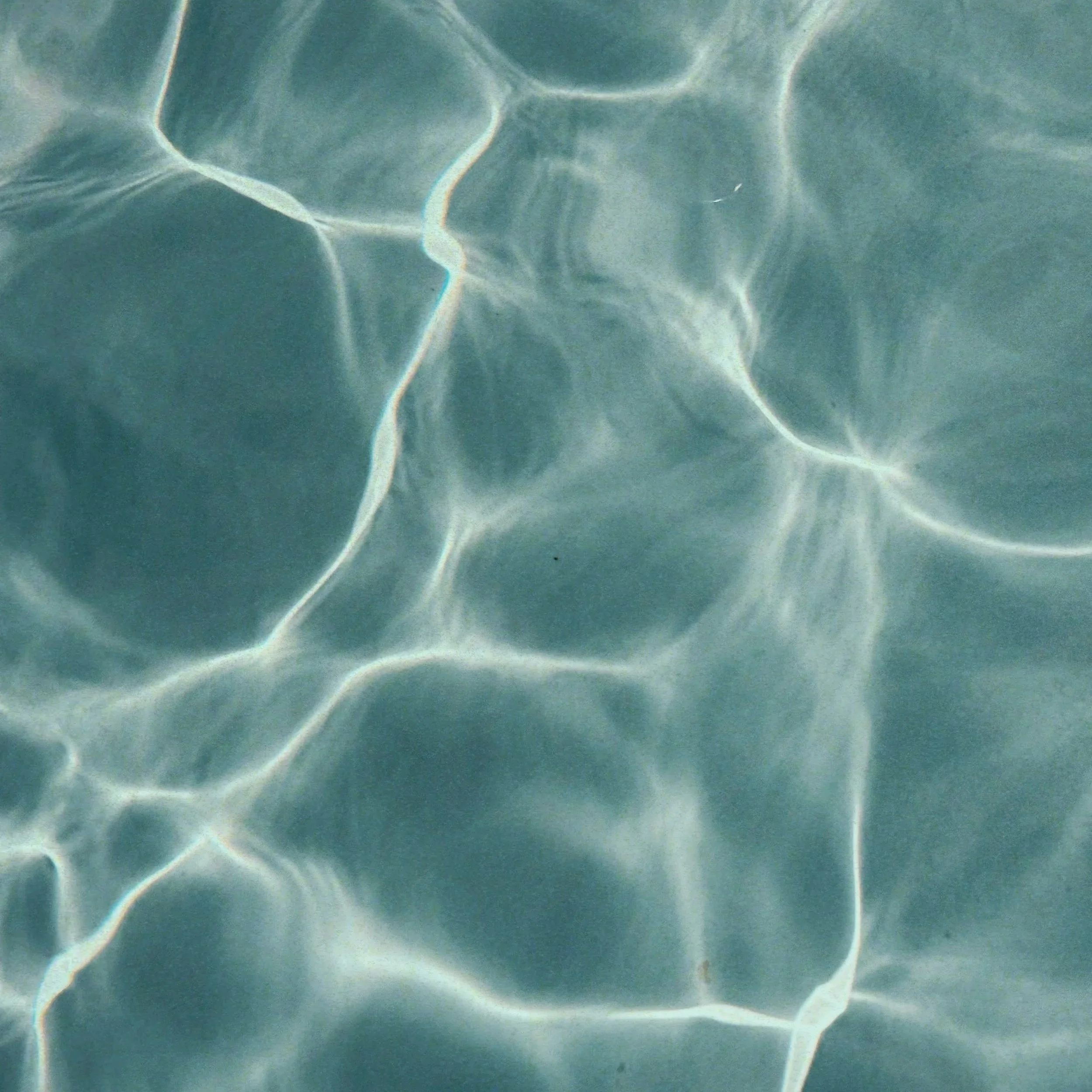
When the benefit is invisible, design becomes the message
For decades, premium water sold on origin. Fiji had the aquifer. Evian had the Alps. The picture did the work: blue, remote, pristine. The story was a place, and a place is easy to shoot.
The new brands have flipped it. Loonen and WaterOuai, both profiled by Fast Company in May, sell on what is missing. Loonen tests water across the country, bottles it in glass, and prints batch-by-batch results behind a QR code on the label. WaterOuai packages Central Texas spring water in a Japanese "supercan" lined with a PET barrier so nothing leaches in.
Here is the catch. Purity has no image. Cleanliness photographs as nothing at all. So every gram of trust has to be built somewhere else: in the weight of the glass, the restraint of the label, the way light moves through a clear bottle. The design is not dressing the claim. It is the claim.
The visual vocabulary of "clean"
Look closely and you can read the grammar these brands are writing in.
Glass over plastic, because plastic is now the villain of the category. A loon on Loonen's label, a bird biologists treat as a purity sentry; it abandons a body of water the moment quality drops. A can engineered so its lining is the headline, not an afterthought. Test results turned into a design element rather than buried in fine print.
This is transparency used as an aesthetic, not just a policy. The visible signals do the talking: the QR code, the clear bottle, the named source all say "we have nothing to hide." It works because the eye reads it before the brain reads a word.
Why the picture outweighs the copy
The numbers back this up. Around 72% of US consumers say a product's packaging influences their buying decisions, per Ipsos, and shoppers form an impression in roughly three to seven seconds, almost entirely on visuals. On a crowded shelf, the design is the opening argument; the copy is a footnote most people never reach.
Liquid Death is the loud proof. Mountain water in a tallboy can, a skull, a heavy-metal wordmark, and almost nothing else; that identity carried the brand to a $1.4 billion valuation and $333 million in 2024 revenue. The water is ordinary. The design did the selling.
And the fear underneath all of it is real enough to move money. A 2024 Columbia study found roughly 240,000 plastic fragments in a litre of bottled water, far above earlier estimates. An Ohio State study released late in 2025 found bottled water carried about three times the nanoplastics of treated tap. The category that overtook soda; 16.4 billion gallons and $28.2 billion in US sales in 2024, double a decade earlier; now has a credibility gap. Design is what closes it.
Where this lands in production
This is the part we deal with directly. Making "pure, cold, clean" read in a single frame is a craft problem, not a lucky one.
The condensation on a bottle has to sit right or the whole thing looks fake. Light through glass has to feel like clarity, not glare. A label has to stay legible at thumbnail size on a phone, because that is where most of these brands are actually discovered. For premium beverage work we often build the hero shot as a hybrid: a real plate where the product needs to feel physical, CGI where we need a perfect, repeatable bottle and full control of reflections. AI sits in the early concept stage; the final trust cues are still built by hand.
None of that is decoration. In a category selling an invisible benefit, the image is the evidence. Get the light and the materials wrong and the promise reads as a claim. Get them right and it reads as proof.
The takeaway
The lesson travels well beyond water. When you are selling something a customer can't see, taste, or verify on the spot (safety, purity, craft, care), the visuals stop being the wrapper and become the argument. Shoppers decide in seconds, and they decide with their eyes.
If you are launching a product where the best thing about it is hard to show, that is exactly the kind of problem we like. Based on what we have seen across years of beverage and product work, the brands that win are the ones that make the invisible look undeniable. We are always happy to talk it through.
Featured Image Brief
- Concept: A single premium water bottle on a clean, near-empty set, shot like evidence rather than an ad. Cold condensation beading on clear glass, one precise highlight running down the edge, the label sharp and legible. The emptiness around it should read as "nothing to hide."
- Style notes: Editorial, high-craft, restrained. Cool neutral palette (soft blues, glass greens, paper white) with one disciplined specular highlight. Strong directional light, deep clarity, no clutter or props competing with the bottle. Material honesty over gloss.
- Format: 16:9 landscape, high resolution. Keep the left third clean for a headline overlay; bottle sits centre-right.
- Suggested AI prompt: "Editorial product photograph of a single clear glass water bottle on a seamless cool-grey background, fine condensation droplets, one clean vertical highlight on the glass, crisp minimal label, soft directional studio light, shallow depth of field, ultra-clean and clinical mood, negative space on the left third, photoreal, high resolution."
Internal Links
- [Building hero shots for premium beverages] → a related 35milimetre article on bottle and drink visualisation
- [Photo plus CGI: when to composite and when to shoot] → article on hybrid product imagery
- [Designing visual trust into a brand] → article on visual direction and brand consistency
External Sources Cited
- Forget Evian. PFAS-free bottled water is the new status symbol (Fast Company)
- Bottled Water Can Contain Hundreds of Thousands of Nanoplastics (Columbia Mailman School of Public Health)
- Some bottled water worse than tap for microplastics, study shows (Ohio State University)
- Setting the right price for a premium beverage: Liquid Death study (BeverageDaily)
