
Visual Campaigns for Gen Z Drinkers: Why Alcoholic and Non-Alcoholic Need Different Playbooks
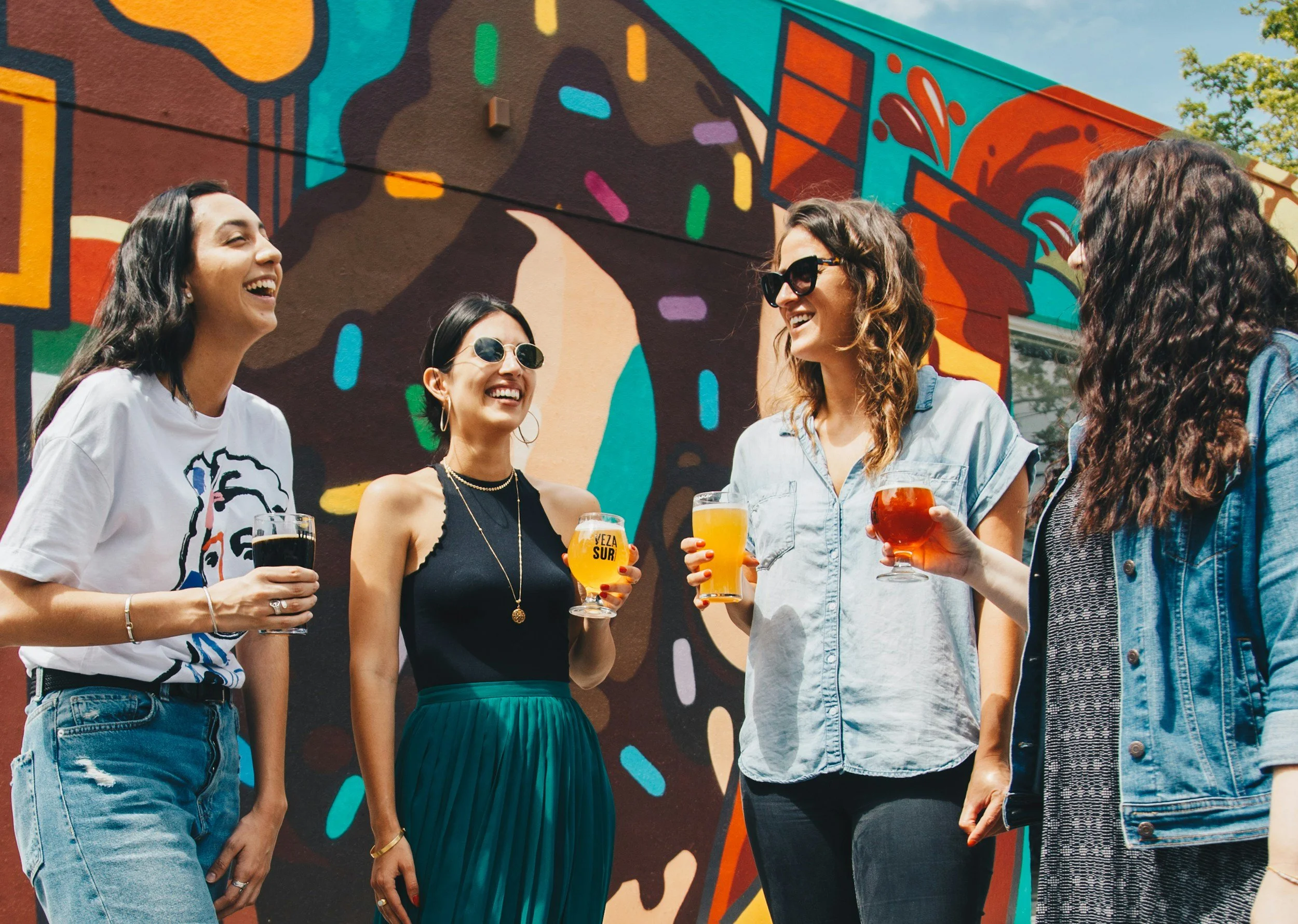
The story we keep getting told about Gen Z and drinking is too neat. They're sober. They're wellness-obsessed. They've swapped cocktails for kombucha. The category is dying.
The data says something less convenient. IWSR's March 2025 report across 15 markets found that 73% of legal-age Gen Z adults had consumed alcohol in the previous six months, up from 66% in 2023. In the UK, that figure climbed to 76%. CGA by NIQ has Gen Z at 20% of the population but 28% of on-premise visits. They didn't leave. They got selective.
That selectivity is the brief. And it changes how visual campaigns should be built; not just for one drinks category, but separately for alcoholic and non-alcoholic ranges that, on paper, share the same audience. Same generation, two different visual jobs.
The brief has changed: from awareness to occasion design
Younger drinkers aren't short of brands. They're short of useful social scripts. That's the line from strategist Mike Foster's recent piece, and it lands hard for anyone making images for a living.
For two decades the default drinks campaign was a beauty bottle shot, a tagline, and a vague promise of belonging. That formula leaks credibility now. If the audience is editing occasions, the visual has to signal which occasion this drink belongs to: first drink of the night, slow Sunday, the one in your hand at the rooftop, the no-regret second pour. If you can't tell from the imagery, you've already lost the choice.
This isn't a youth-coding problem. It's an occasion-design problem; and visual direction sits right at the centre of it.
Visual campaigns for alcoholic drinks: build a behaviour, not a bottle shot
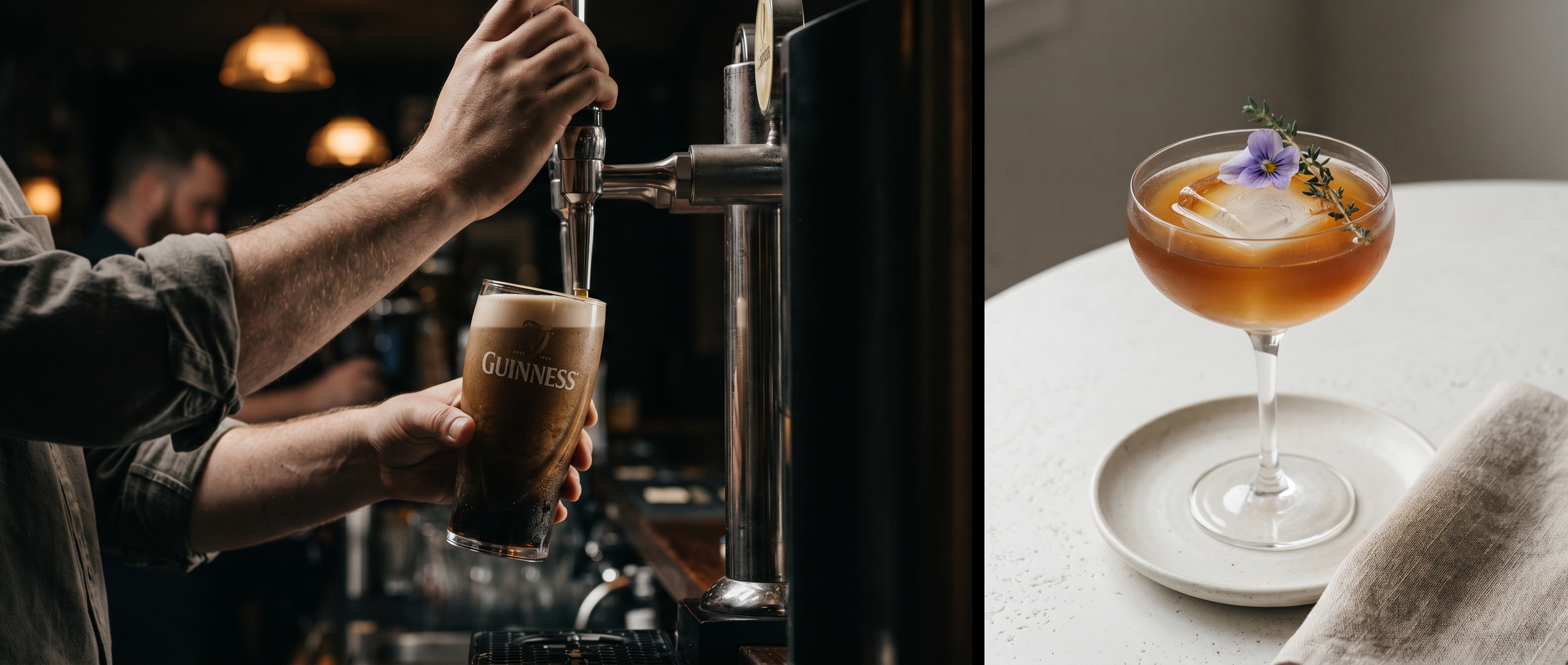
Guinness didn't get hot on TikTok because it found a clever filter. It got hot because it gave people something to do. The pour. The wait. The settle. The "split the G", which Bloomberg reported drove a sales surge through 2025, with one Soho landlord saying he watched it happen 120 times a day. Not a single penny of paid media bought that.
The lesson for visual campaigns in alcohol is simple to state and slow to apply: photograph the act, not just the object.
A few practical implications:
Distinctiveness is recognition speed. Gen Z makes drink choices in low-light, noisy, peripheral conditions; a back bar, a fridge door, the table next to theirs. The Guinness pint, the AU gold bottle, BuzzBallz spheres. Visual campaigns should treat distinctiveness as a functional asset, not a decorative one. If your bottle reads as a silhouette across a crowded pub, your hero shots can do less work.
Ritual is the real subject. The frame should make the drink copyable. A specific pour, a specific glass, a specific first move. Aperol's spritz at golden hour is the obvious blueprint; the imagery isn't selling a bitter Italian liqueur, it's selling a five-second behaviour anyone can repeat with friends.
Social proof, not stock-shot polish. Gen Z is fluent in over-produced product photography and tunes it out. The work that travels tends to look closer to documentary: hands, condensation, a real glass with a real chip in it, a real bar mat. That doesn't mean shoot less; it means design imagery that survives a phone-camera quote-tweet.
Heritage as backdrop, not lecture. Whisky, tequila and aperitif brands sit on inherited codes that can feel like homework. The fix isn't to abandon them; it's to let them sit behind the behaviour, not in front of it. Show the serve first. The provenance can earn its frame later.
Visual campaigns for non-alcoholic drinks: earn the occasion through aesthetic
The non-alcoholic brief is a different animal. Diageo's 2025 trends report flagged a 79% year-on-year rise in conversations around "decelerated occasions" and named "zebra striping" as a real behaviour: alternating alcoholic and non-alcoholic within the same night. Brands like The Mocktail Club and De Soi have repositioned around quiet, real-life moments rather than swapped-in night-out alternatives.
Visual campaigns for zero-proof products fail when they ape alcohol. A 0.0 lager shot in a moody bar with a dripping glass is a near-beer ad pretending to be a lager ad. Younger drinkers see the pretence instantly.
The aesthetic has to earn the occasion on its own terms:
Own a different mood. If alcoholic visuals lean theatre and night, the non-alcoholic frame is often light, ritual and afternoon. Soft natural light. Glassware as architecture. The colour of the liquid as the hero. This isn't about being precious; it's about giving the viewer permission to reach for it without translating "no alcohol" into "no occasion".
Layering is the story. Layered canned mocktails, latte art, fancy ice, edible florals; these aren't garnishes, they're the visual contract. The drink performs in the photograph. That's why a £6 mocktail can hold premium pricing on Instagram while a £3 fizzy water can't, even when the liquid cost is comparable.
Functional cues integrated, not slapped on. Adaptogens, prebiotics, magnesium, nootropics. These belong in the visual world of the brand, not as bullet points across the can. The smartest functional drinks brands let typography and material carry the cue: clean type, considered colour, a transparent or recycled-glass bottle that reads "this is doing something" without spelling it out.
Glassware as set design. Non-alcoholic visuals live or die on the glass. A mocktail in a Coke tumbler reads as juice. The same drink in a coupe reads as an occasion. Treat glassware as part of the campaign, not the home economist's problem.
The zebra-striping problem: when your two ranges share a night
If you run a brand with both alcoholic and zero-proof SKUs, the awkward truth is that Gen Z doesn't swap one for the other; they alternate. The visual continuity question matters: how does your night-out visual world hand off to your slow-down visual world without feeling like two different agencies got the brief?
What works is a shared visual grammar with deliberately different temperatures. Same brand mark, same type system, same photographic philosophy; but the alcoholic frame leans high-contrast and night-coded, the zero-proof frame leans soft-light and day-coded. The transition between the two should feel like the same person at different points in the same evening, not two completely different brands.
Heineken 0.0, Guinness 0.0 and Tanqueray 0.0% have the easier job here because the parent brand carries the codes. Newer multi-tier brands have to design that continuity from scratch, and the visual system is where it either holds together or falls apart.
What this means for production
Designing visuals around behaviour and occasion is a different production brief than shooting a glamour bottle. It usually pulls three things together: a strong label and packaging system that reads at distance, hybrid photo plus CGI work for serve and ritual imagery, and AI-driven concept exploration to test mood and composition before a single light is set.
We do a fair amount of that mix at 35milimetre: bottle compositing where the studio plate didn't quite hold, hybrid CGI plus photo where the serve has to land perfectly across multiple market variations, and AI in early concept stages to surface options before commit. The point isn't the toolset. The point is that occasion-led campaigns reward a production approach that treats the bottle as one element of a behaviour, not the whole story.
The takeaway
Gen Z hasn't abandoned drinks. They've abandoned visuals that don't earn their place in the night, or in the afternoon. Alcoholic campaigns win when they show a behaviour worth copying. Non-alcoholic campaigns win when their aesthetic justifies opting in without an explanation.
Different jobs, different visual languages, often the same brand house trying to do both. The work pays off when the photograph stops asking the viewer to admire the product and starts giving them something to do with it.
If you're working on a drinks brief along these lines, we're always happy to talk about how to design the visuals around the occasion rather than the other way around.
External Sources Cited
- IWSR data via Global Drinks Intel: Gen Z drinking is rising, not falling
- Bloomberg: 'Split the G' TikTok Trend Driving Guinness Sales Surge
- Cherwell: Split the G, the performative cult of Guinness drinking
- FoodNavigator: Gen Z's rising interest in non-alcoholic beverage requires a new playbook
- Drink Noms: Gen Z drink trends 2026; mocktails, lattes, wellness
- VIZIT: Gen Z is rewriting the rules of drinking
