
What a Creative Collective Actually Looks Like in 2026 Visual Production
The phrase "creative collective that combines art, technology, and science" used to belong to art school catalogues and gallery wall texts. It described experimental groups doing installation pieces with projectors and motion sensors. In 2026, the same phrase is increasingly being used to describe something far more practical: the small multi-disciplinary studios that brands now hire for serious commercial visual work.
The shift is not a marketing rebrand. It is a real change in how visual briefs come in. A packaging refresh now needs a photographer, a CGI artist, an illustrator, an AI workflow specialist, and a colour discipline that holds across all of them. A landing page hero image needs photo, retouch, type, and often a CGI insert. A brand campaign needs the same hybrid setup repeated across formats. The single-discipline studio cannot cover the brief. The big agency overcharges for the parts you don't need. The space in the middle is where the modern creative collective lives.
This is a working description of what that model actually looks like, why it works for the briefs landing on creative directors' desks right now, and how to recognise one when you find it.
Why the hybrid brief is now the default
Look at almost any visual project that shipped in the last twelve months for a brand that takes craft seriously and you will see at least three disciplines on the credits. The Heinz AI-driven brand refresh layered AI imagery into packaging, digital ads, and social content; the production needed art direction, AI, retouching, and typography in one pipeline. H&M's 30 AI digital twins required photography, AI, motion, and brand colour control. Nutella's seven million unique AI-generated jar labels needed a generative system, packaging design, print production, and a logistics layer.
Briefs at smaller scale follow the same pattern. A direct-to-consumer brand wants product photography for the catalogue, a CGI render for the variants that don't physically exist yet, an AI-generated lifestyle image for a launch campaign, and a retoucher who can finish all three so they sit cleanly together on the product page. This is the new normal. It is the reason "comprehensive" appears in so many search queries about visual agencies; brands are looking for a studio that can hold the whole thing together.
A single-discipline freelancer cannot. A traditional ad agency with rate cards built for thirty-person teams will quote three times what the job is worth. The collective sits between the two: small enough to be efficient, broad enough to span the brief.
What "art, technology, and science" actually means in commercial work
The phrase reads like buzzwords until you break it down into the disciplines a real studio holds at once.
The art side is the part most people think of first: composition, lighting, brand sensibility, restraint. It is what stops AI-generated work from looking generic and what gives photography its emotional pull. It cannot be automated, and it is the through-line that ties a multi-discipline output together.
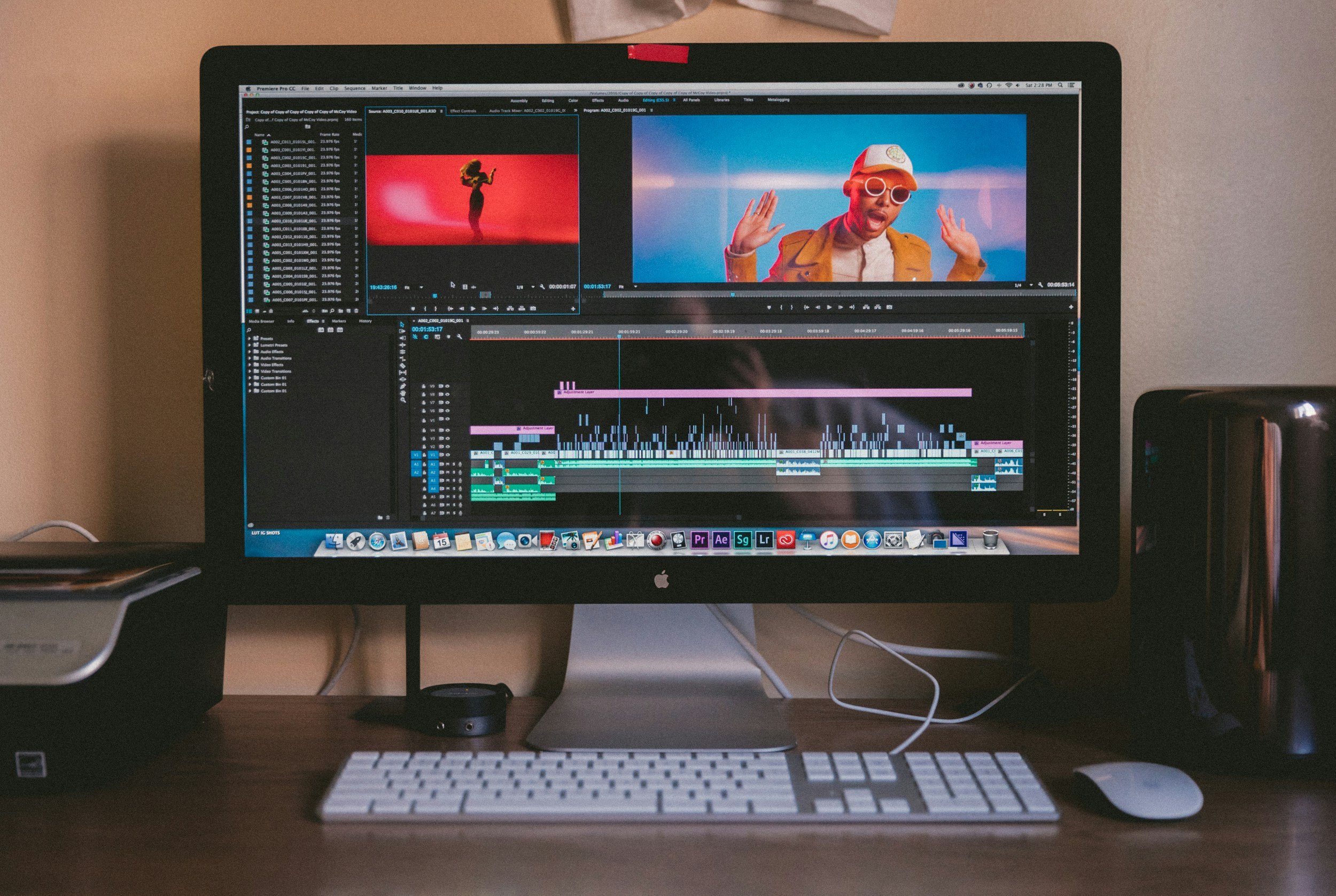
The technology side is the production stack. CGI in Cinema 4D or Blender with a Redshift or V-Ray render pipeline. AI generation across multiple models because, in 2026, no single model is best at everything. According to industry production data, professional teams now routinely switch between Flux 2 Pro for photorealism, Imagen 4 for environments, GPT Image 1.5 for prompt adherence with text, and Reve for product accuracy, depending on the task. Add to that compositing in Photoshop and Nuke, retouching pipelines, and platform-specific finishing for delivery formats.
The science side is the part most studios skip and the part that separates clean work from work that doesn't quite hold up. It is colour management across capture, render, and output devices. It is physically based rendering material accuracy. It is perceptual colour calibration so a brand's signature blue reads the same on a phone screen, a print mockup, and a billboard. It is workflow rigour so files don't drift between sessions. None of this is glamorous; all of it is what makes a body of work look professional rather than like a moodboard.
A studio that genuinely combines all three has to organise itself around all three. That usually means a small team where the people sit close enough to talk every day.
How the small multi-disciplinary studio model works
The shape of these collectives looks similar across the industry. A core team of two to five people covers the primary disciplines: photography or post-production, CGI, illustration or design, AI workflow. Around them sits a rotating bench of specialists pulled in for specific jobs: a 3D character artist for one project, a packaging printer for another, a sound designer or motion editor for a third.
This setup has clear advantages for the brand or agency on the other side. The cost structure is leaner because there are no idle staff between projects. The communication is faster because the disciplines are in conversation rather than separate departments. The output is more coherent because the same eye is on the work from concept to delivery. And, importantly, the studio is allowed to say no to work outside its strength rather than overstretching to keep a billable team busy.
There are limits to the model. A small collective cannot run six campaigns simultaneously the way a thirty-person agency can. Capacity is finite, and serious briefs need to be planned. For the brands that value craft over volume, that is usually a feature.
35milimetre runs this way. The core is three: post-production, design, and 3D. The bench rotates depending on the brief: illustrators, motion artists, typographers, and others we have worked with for years. The setup is not unique; it is the model that increasing numbers of brand teams are looking for. The signal in the search query "creative collective combining art, technology, and science" is exactly this: someone is looking for the right shape of team for a hybrid brief.
How to recognise one
A few markers help separate a real multi-disciplinary collective from a single-discipline studio rebranding itself with a wider service list.
The portfolio shows range. Not in style; in discipline. Real photo work next to real CGI work next to real AI-driven work, all clearly produced by the same hand. If the portfolio is all photography with one tacked-on CGI sample, the studio is a photo studio.
The team page is honest about who does what. A collective with three to seven people lists them with their disciplines. A studio that lists "the team" without names usually means freelancers being assembled per job; sometimes that is fine, but it is a different model and worth knowing.
The conversation is direct. Talking to a small studio means talking to the people who will do the work. There is no account manager translating. The questions about budget, schedule, and scope are answered immediately, and the answers are specific.
The work has a through-line of finishing. Whatever the discipline mix, the final output is consistently controlled: colour, light, composition, type. This is the science side doing its job quietly behind the visible craft.
If you are looking for a creative collective for a real brief, ask to see three projects and look for these markers across all three. The right studio will not be the one with the biggest portfolio; it will be the one whose work could only have come from that team.
